Whenever a New Year begins people often reflect on the past year and set new goals that they want to accomplish. The intention may be to lose weight, eat healthy, begin college, or start a diet, among many others. Whatever it is, it usually calls for will power, self-talk, motivation or simply encouragement from friends or family. It takes some inner strength and dogged determination to achieve the goals which were set.
Motivational Speaker Jessica Cox
Take for instance, Motivational Speaker Jessica Cox. She has defied all odds by turning obstacles into accomplishments. Jessica Cox was born without arms as a result of a rare birth defect, but that has not stopped her from being a dancer, a swimmer, and driver of a car. Astonishingly , she drives a car without having to use her upper body. She uses her feet like most people use their hands, enabling her to drive an unmodified car with an unrestricted license. She can also type on a keyboard at twenty-five words per minute, pump her own gas, and to put in and remove her contact lenses. Additionally, she is a certified SCUBA diver. Jessica Cox also has her Sport Pilot Certificate for an ERCO 415-C Ercoupe, designed in the 1940s, which the Federal Aviation Administration has designated as a light sport aircraft. The plane that she flies was built without rudder pedals. Instead, the rudder interconnects with the ailerons through the yoke. This unique design allows Cox to control the airplane with one foot controlling the yoke, while the other foot controls the throttle.
After reading about Jessica Cox and her accomplishments, there is hardly anyone who can say that they wouldn’t be able to achieve whatever they conceive and believe. In a previous article, I discussed what it means to do self-talk . There is power and life in the tongue. Speak success into your life. Once there’s life, there’s hope. We should encourage each other with positive vibes. The sky is the limit and as educators we have to incite ourselves,as well as our students, to reach for the sky.
I Can
Jessica’s story has shown us adversities and challenges should not prevent us from trying and doing our best. Once we put our minds to accomplishing something, we can do it since we say “I Can” is in the phrase “I Can’t!” In the long run, challenges turn us into better people. How can an educator or a parent encourage a student or child to follow his or her dreams? We could help and introduce students to SMART goal setting, When we set goals they will be motivated, purpose will be improved and attention will be more focused. As educators we must give students positive feedback. Be a role model and use words that inspire and compliment. A single word can change a student’s life or dream. New year, new beginning ! We can redirect a student’s path to positively. Let us also walk in newness, strength and boldness! Remember as Napolean Hill once said, “Whatever the mind can conceive and believe it can achieve!”
In one of my recent articles, I discussed Differentiated Instruction, which is the method in which a teacher anticipates and responds to a variety of students’ needs by adjusting and teaching students to the way they learn. In other words, a teacher might have a classroom filled with twenty students and each of those students learns differently. Therefore, within that classroom, he/she will have different styles and tactics of teaching them by either modifying the content, adapting the process of how the material is taught, or redefining how students demonstrate their learning. The way the brain is wired varies from individual to individual, and contrasting parts of the brain are ready to learn at divergent times. In other words, what seems easy for one person/student might be challenging for another. LEARNING can be DIFFICULT for many people!!
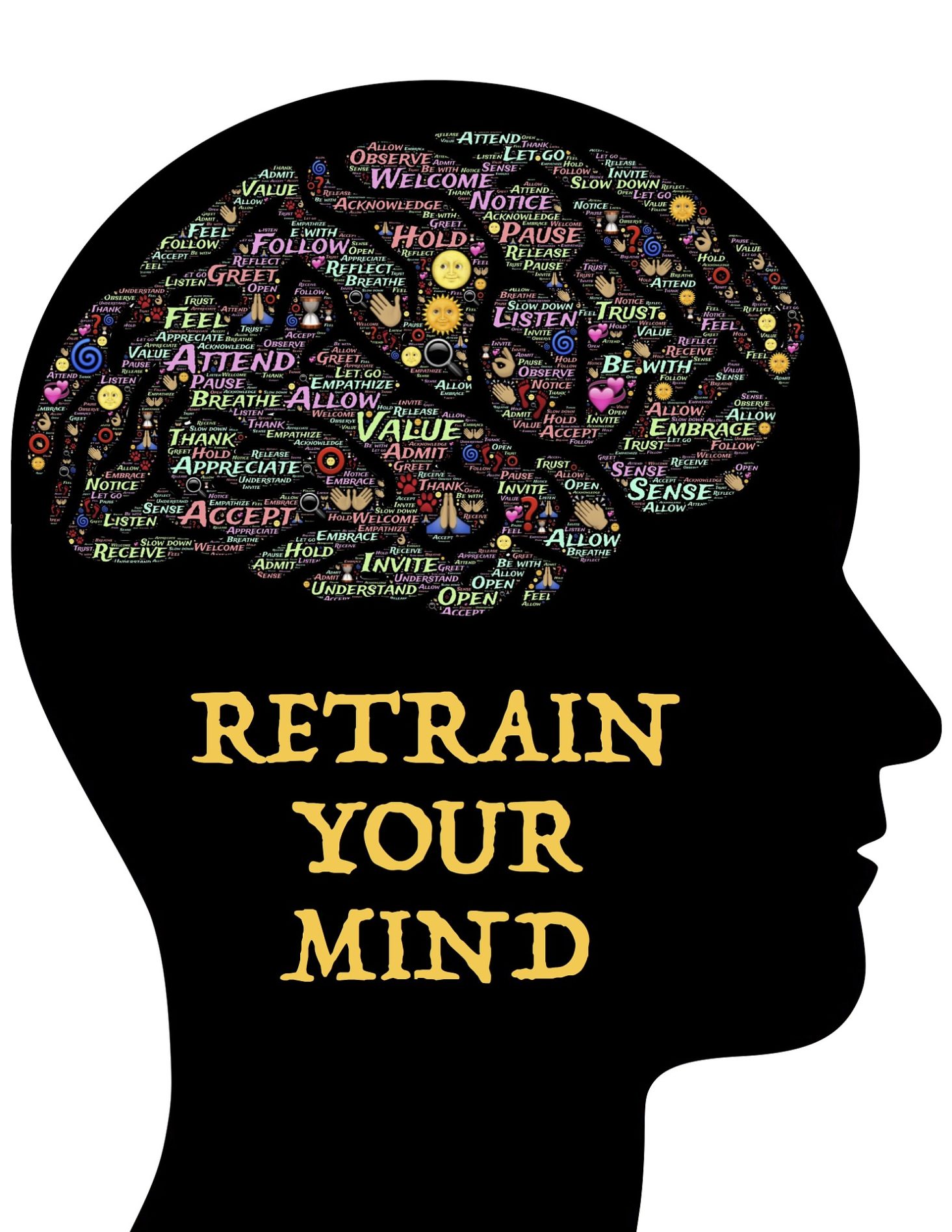
In an article written by Deborah Farmer Kris she quotes “But Barbara Oakley is a self-described ‘former math flunky’ who ‘retooled’ her brain — and who has since made it her life’s work to help others learn how to learn by explaining some key principles from modern neuroscience.” She emphasizes, “…the field offers educators many techniques that are rooted in brain research, such as deliberate practice and interleaving. Like Oakley, it is our job as educators to encourage and teach students how to slow down and actually absorb what is being taught. ” We all know so many students who rush through their work just to be finished with it , regardless of the quality or outcome. They must be reconditioned to have patience and understand that ALL things are difficult before they become easy, and that it doesn’t matter how slowly one goes, as long as one does not stop or give up. Taking what Oakley describes as “brain breaks” along the way plays a vital role in the learning process.
As educators we have to take into account the various learning styles of students. Learning styles impact the way we learn and process information. Research has shown that various learning styles use different parts of the brain. The brain uses the following learning styles to process information:
Visual (spatial): prefers using pictures, images, and spatial understanding.
Aural(auditory-musical): prefers using sound and music.
Verbal (linguistic): prefers using words, both in speech and writing.
Physical (kinesthetic): prefers using your body, hands and sense of touch.
Logical (mathematical): prefers using logic, reasoning and systems.
Social (interpersonal): prefers to learn in groups or with other people.
Solitary (intrapersonal): prefers to work alone and use self-study.
Sometimes as educators, adults and parents, we crush students’ and even some adults’ dreams because we tell them that they are not good enough or that they are wasting their time chasing a dream. Instead, as educators, we have to encourage our students and help them identify the way they learn in order to be successful. We simply need to ask ourselves the question, “Do we encourage students to find their learning styles and then break down the learning styles so students are successful?
Below is a copy of Oakley’s article to which I referred .
We recently celebrated the holiday season and most of us were considering “giving joyously.” Perhaps the giving was not limited to just “joyously,” but delightfully, gratefully, passionately, freely, readily, and warmly among many others. We give our time, money, gifts, love, talents, selves, and service. We give to our family, friends, community, career, and business. As educators, we are also called to give in various ways to our students, co-workers and district. There are times when we feel like we have given our all and it is not appreciated, or we give and we don’t feel as if we are getting back. The Bible reminds us in Acts 20:35, “In everything I did, I showed you that by this kind of hard work we must help the weak, remembering the words of the Lord Jesus himself who said: ‘It is more blessed to give than to receive.’ ”
How many of us can honestly say that we give without expecting to receive in return? I know that as educators some of us can say that we are appreciative when students’ eyes illuminate because they have understood a concept that we are teaching. Or we are validated when another student says that it is because of us that they are encouraged to attend school. For some reason, most educators believe that we get the best out of students when we give them our best. It is a known fact that education is not the highest paid profession; however, we give delightfully and with grace and from our heart. We put much thought into what we give because we want our students to give us joy through their joy of learning, their wonderful grades, and the memories that they will treasure through the learning experiences in the classroom. We honestly believe that the giving begins with us and we don’t always receive or see the rewards immediately. We can learn from several people who gave of themselves and showed us that there is power in giving. Notable figures like Mother Theresa, Mahatma Gandhi, Dr. Martin Luther King Jr. Malcolm X, Mandela, Marcus Garvey, to name a few, consistently remind us of the strength in giving. We are reminded to give passionately daily, but not just during the holiday season.
Even though, as humans, most of us enjoy being on the receiving end, we have to give in spite of a reward. There are some people (including educators) who I know can say that at some point or another, they have received a gift that they didn’t expect or that exceeded their expectations. Well, it is important to remember that we are still blessed when we are able to say, “Wow, we got paid for all those other days we were giving.”
David Cameron Gikandi sums of giving joyfully when he said, “Give cheerfully and freely. It is the energy behind the giving that matters so do not give grudgingly. The law of cause and effect guarantees that you shall receive plenty for what you give.” Let us encourage each other of to give of our best realize that in giving, we will receive in due time!
“What are you studying again?” “Why are you still in school?” “You are still studying?” These are some of the questions I often hear from my peers or family members. I heard those questions so many times that I just wanted to take a few steps back and look at them under a microscope.
Professional Student
I guess being hungry to learn, or what some people refer to as a “professional student,” is seen as a terrible thing. Some people, including myself, are often referred to as professional students, but are simply trying to study for several reasons. What are some of the reasons why people study or go further than high school education? The list seems endless, but includes some of the following: –
To climb the ladder of success
To be someone
To use as an equal opportunity
To gain knowledge
To improve one’s knowledge
To be more diverse
To be more proficient in their aspirations in life
To fulfill job requirements (to get promoted)
It is fun to learn – some people just simply like to learn
To gain employment
To make more money
Want to get a higher education than their parents did
To set an example for their children
To switch careers
To make a connection (meet people) or to network
To reinvent self
Love to learn
Gain independence
Employment
To break the glass ceiling
The reasons may vary but ideally, in the long run once you are educated no one can take education away.
As I reflect on myself as an educator, I wonder how students feel about being in my classroom. Do I encourage and promote a love for learning? I can engage students in continued learning so they enjoy and value learning
Changing the powerless with Education and Success!
Since I am given the curriculum, I should try to focus on the classroom environment, the materials that I use to engage the students, as well as their interests. The activities and materials that I use to teach students should not be boring or mundane. If I show enthusiasm about the subjects I teach, then students will be excited about learning and want to keep learning. I should explore the various learning styles to meet my students’ needs. Do I value their thinking? Do I think about their differences? Do I set specific learning goals for the students so they will love learning? I should always be thinking about how I can help my students feel a sense of belonging and also get to know their parents. I can implore upon them that education holds them up for the rest of their lives. It’s part of the foundation upon which everything else rests.
As a teacher, I can share information about the student’s specific areas of weaknesses and strength so I can help parents realize the underlying causes of their child’s difficulty. This conversation can also include information about how to help their child use areas of strength to support areas of weakness. This will promote success for the students. I can use my educational status to change the powerless.
It is vital to remember that in this fast paced world, staying in the same place is actually going backward. If you don’t keep learning, if you choose to stand still, you will fall behind in the game of life. It’s usually what you learn after you think you know it all that is the most valuable!
“It’s gonna be okay, Mommy!” These were words of comfort from the mouth of a five year old. This is a message that is so profound – it sends peace, hope, trust, reassurance positivity and love. There are so many days when I feel discourage, but those words give me the will to go on. It tells me that I have hope for the future, hope for unfulfilled dreams. Aristotle once said, “Hope is a waking dream.”
HOPE
In the classroom,there are many students who are hopeful, but aren’t even aware of this hope, or they don’t understand that there is hope. They might not be able to read or even understand a math problem, but with encouragement and a pat on their shoulders, teachers are sending a message of hope. This is telling them that even though things seem bleak, they can learn to read one day at a time with proper coaching.
As educators we never know how much of an impact we have on students. We might be the only source of inspiration because we provide an atmosphere of calm and serenity. The majority of them know that we have their best interests in mind. Our experiences as educators taught us that students gravitate towards us when we all them to feel wanted in our and years after they will still reflect on some of the experiences in the classroom. We present the epitome of promise for some students who have documented struggles at home – lack of parental guidance, lack of functional home environment, abusive homes, overcrowded homes and other factors that are not conducive to learning. But with encouragement we can detect the gleam in their eyes as the school year progresses and they gain understanding of the material in the curriculum. Educators can be pessimistic at times, but when we measure the success stories against the disappointments, we will find that they vastly outweigh each other.
Hope is spelt out a student I taught Math in 5th grade a few years ago. When this student entered my class all I could hear from her was how much she disliked Math and I told her I would get her to change her mind about Math. With the correct coaxing, coaching, and differentiating she left my class feeling more positive and hopeful about the subject. Fast-forward five years later I heard from this student that she was taking Advanced Proficiency Math! You can just imagine my face beaming with pride!!
Hope sends the message to a student who has failed a test, to pick himself/herself up and try harder for the next test. This student stays motivated and can do self-talk, because the positive message is being reinforced daily in the classroom. “It’s gonna be okay,” is the affirmative mantra we all need to adopt!
Gail Goldwin once said, “Good teaching is one-fourth preparation and three-fourths theater.” It is not uncommon for teachers to spend many hours grading papers, preparing lessons, entering grades in computers and just figuring out how to make a lesson fun and exciting to students. Those teachers who go above and beyond to help everyone they meet deserve hugs and the highest honors. To the teachers who have to wait for the custodians to open doors to the school every morning, this is for you. Because every time I feel like I’m early for work at 7 am, there are a few people who are already ahead of me, photocopying assignments for learning groups.
Being Ready to Teach
By 8:35 am every morning those same teachers are ready to teach with creative, interesting, rigorous and thought-provoking lessons. Lessons that open the students’ minds, and not only encourage them to absorb facts, but acquire understanding.
Many years ago when I was hired to teach at an urban school district in New Jersey, it was hard to adjust to the new environment. But the same teachers who were up early in the morning to prepare, were the same ones who welcomed me, by having students write me letters of advice on how to become a wonderful teacher like the ones they already had. Since that day, it has been my quest to make my classes just as fun- filled and rigorous as their classes. It was William Ward who said, “The teacher explains, the superior teacher demonstrates, and the great teacher inspires.” The teachers who go above and beyond have motivated me and so many other faculty members to be the best teachers we can be by seamlessly weaving fun and custom wrapped methods which result in success for divergent personalities.
Having humility, patience and enthusiasm for the subject area is how inspirational teachers continue to do so well. They have high expectations for their students and the students enjoy the encouragement as they rise to the challenge. They provide a warm environment that allows their students to make mistakes.
On a professional level, these teachers are always willing to collaborate and make suggestions where needed. Great teachers do not say things like, “You’re really not cut out for this.” “This is not your thing.” They realize that students soon learn their own limitations and do not erect false ceilings up for them. Inspirational teachers have been consistently driving students to be the best that they can be for many years.
When a school is divested of such individuals, whether through attrition, retirement, reassignment, etc., everyone suffers. Sure, their positions may be filled, but they can rarely be replaced. There remains a resounding void, both in the classroom and in the hearts of those for whom their inspiration may have been his or her last hope. Teachers Who Makes a Difference

 By Dr. Marcia Davis-Dawkins







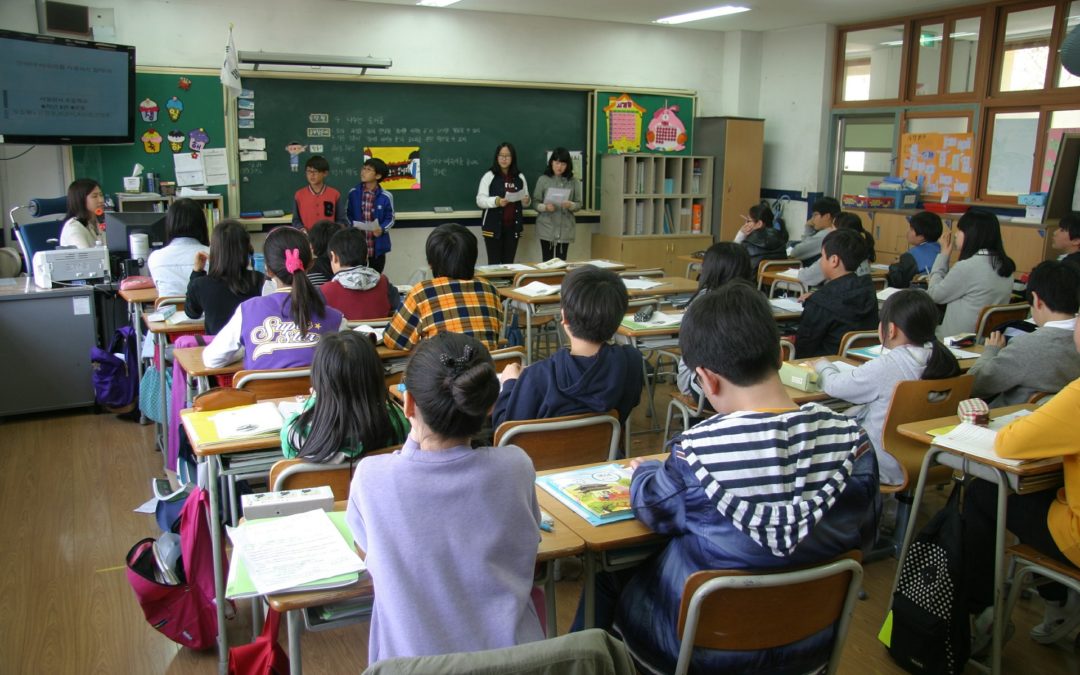
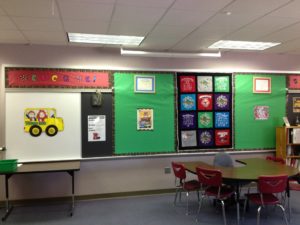 grading papers, preparing lessons, entering grades in computers and just figuring out how to make a lesson fun and exciting to students. Those teachers who go above and beyond to help everyone they meet deserve hugs and the highest honors. To the teachers who have to wait for the custodians to open doors to the school every morning, this is for you. Because every time I feel like I’m early for work at 7 am, there are a few people who are already ahead of me, photocopying assignments for learning groups.