by Marcia Davis-Dawkins | Feb 5, 2019 | Education, Kids, Parents, Teachers, Teens
Loneliness and Mental Wellness

 By Dr. Marcia Davis-Dawkins
Have you ever felt alone? It is often said that we can be in a crowd, but still feel alone. Some skeptics might even ask, “How is that possible?” But truth be told, it is possible for people to feel left out in a crowd or even in the classroom. Take for instance the student who is new to an area or a school and because he/she has no friends in the environment then, he/she feels as if he/she doesn’t belong. There is also the case where the student has had some emotional issues in the family, now he/she feels isolated because there are hidden pains in the student’s life.
“Why doesn’t anyone want me?
At times, there are students who might have been abandoned by their parents so the students definitely feel unwanted and unloved. Their first thoughts might be, “Why doesn’t anyone want me?” or “Why me?” This type of loneliness might even lead to students inflicting pain on themselves or even lashing out at their fellow classmates. They might be verbally abusive to those around them in an attempt to mask their lonely feelings. Still another example, students might feel alone when going through puberty and are trying to figure out themselves, as sometimes is the case for students who are in the middle school (ages 11-14).
For adults, being lonely or being alone can be a time of reflection where one can take stock of where they are coming from, where they are now and where they plan on being for the future. Plus, for those who are religious, it can be a time of meditation with God – He usually reveals Himself to the meditator and gives plenty of understanding to life. Reflection can lead to understanding of oneself, so that there is no room for depression or anxiety. But, like most things, there should be balance where you should not dwell too much on the negatives in the past but learn from the past and use with moderation. It might be a time to ask not why is this happening to me , but rather, what is this teaching me?
In the long run, what we don’t want is to mask our feelings or hide our identity because of being hurt. Find someone you can confine in or use alone time to read a book or write your thoughts so you are not consumed with them. It is important to be yourself and not compare yourself with another person, thinking you are not smart enough, you are not beautiful/handsome enough, not rich enough, not outgoing enough. There are people who feel like they are so insufficient and aren’t satisfied with who they are.
Loneliness for Adults
 Also for adults, loneliness can come because of a lost spouse or loved one and things seems like your world in about to end because the person is grieving. For some, it can be a sense of confusion. Some might question themselves, even question God, or “Why did this happen?” “How will I survive without my spouse?” “Where do I stand?” “What will I do in the weeks, months, years to come without my spouse?” These, of course, are legitimate inquiries without immediate answers, but the interesting thing is that there is usually help, whether through family/friends support or from counselors. Whatever the situation, fear of being alone or the feeling that we will never make it – there is always hope.
 We might be lonely simply because people have disappointed us so much that we just want to be by ourselves and enjoy our own company. At times, we go through a period of loneliness because this time is needed for reflecting where we can assess ourselves and set new goals. Frankly speaking, we shouldn’t fight this aloneness, but embrace it and develop something that you might never have. It could be a time where we can get to know ourselves. At whatever cost and at whatever stage in life we are, loneliness is real and it affects our psyche. Whether we want to admit it or not, it can play a big part of our lives (young or old). It is no wonder why what Maya Angelou said is so poignant, “Music was my refuge. I could crawl into the space between the notes and curl my back to loneliness.” What is vital to remember and remind our struggling students is that if you’ve ever had feelings of loneliness, you are far from alone. Loneliness is one of the most common, if unpleasant, emotions that millions of people experience. For some it is passing, for others, it is recurring. But for all of us, it is a part of the human experience.
Emotions/Feeling

by Marcia Davis-Dawkins | Jan 23, 2019 | Education, Kids, Parents, Teachers
Embracing Change
By Dr. Marcia Davis-Dawkins
In one of my recent blogs, “Change Our Positions”, I wrote about change and it seems as if I am revisiting because as we evolve we need to have change. Change can sometimes be difficult for most people. What then is the meaning of change? Change as defined by the dictionary, is “to make or become different.”
Change for some means moving forward and forgetting things that are behind. For many, the change of a new year means making a resolution to do better in life – whether it’s losing weight, changing your way of eating or simply doing things differently primarily to make life better. When for instance, there is a divorce, there is also change and a new way of life for both persons involved. At times it can also mean change in location for one or both parties. If there are children involved, they have to deal with change of being in a single parenting home or moving to another school.
For the most part, change is usually not easy, but the idea is to pick up the pieces and start over, but don’t dwell on the past or what could have been. Change can mean trying new things, as well as growth, because you are learning new things and setting new goals and aspirations. Change means switching from one thing to another, but it also means that you find out about yourself with regards to what you can tolerate and in turn grow through the learning.
Fear
There are many people who fear change because they are comfortable with what they are doing or at the level they are. This lack of movement towards change can hinder progress to move forward. Since we always seek to evolve and grow higher, change is a necessary force that we must encounter. Many times the change may cause us to come to a roadblock, but we have to find ways to get over or around the obstacles so we can be elevated. And if and when we pass the roadblock, we gain strength. Just imagine the joy when we realize that we surpass the trials and tribulations and how satisfying to know that we did it! This definitely is a booster to our self-confidence and now we can believe more in ourselves. This sudden rush of joy could also encourage us to want to climb higher and higher. There is a little song that we use to sing as youngsters that said, “It only takes a spark, to get the fire going and soon all those around could warm up in it’s glowing.” This joy will become contagious because we want to spread it all around. This positive vibe will keep on going and soon there will be no stopping the elevation, as we won’t want to stop learning. Change definitely means learning new lessons and discovering things about us. Some of us make changes is our lives with the belief that like the old adage says, “flowers tomorrow are in seeds planted today.”
What role does change play in education?
Like so many other things, change is necessary for growth. Students are going to need skills in their future beyond the academic achievement goals that have been the focus of the past. To help them prepare for that future, they must become adaptable learners. That means that change is not only necessary, but inevitable. Change WILL happen, so why not embrace it? Teachers are sometimes resistant to do that because often they view change as being done solely for the sake of change. Unfortunately, sometimes that is the truth. Veteran teachers have seen changes initiated only to be abandoned because they did not prove fruitful. But “meaningful change” goes beyond that, leads to something better and should be welcomed
 Letting go of what we find most familiar and comfortable is difficult, but stepping out of that comfort zone enables the potential for fulfillment and reward. Innovation and change will only be successful if we believe there just might be a better way. So, focus energy not on fighting for the old, but on building the new. Our students cannot become who they want to be by remaining what they are.
Change Our Positions!
by Marcia Davis-Dawkins | Jan 8, 2019 | Education, Kids, Parents, Teachers
Can We Forget Where We Come From?
By Dr. Marcia Davis-Dawkins
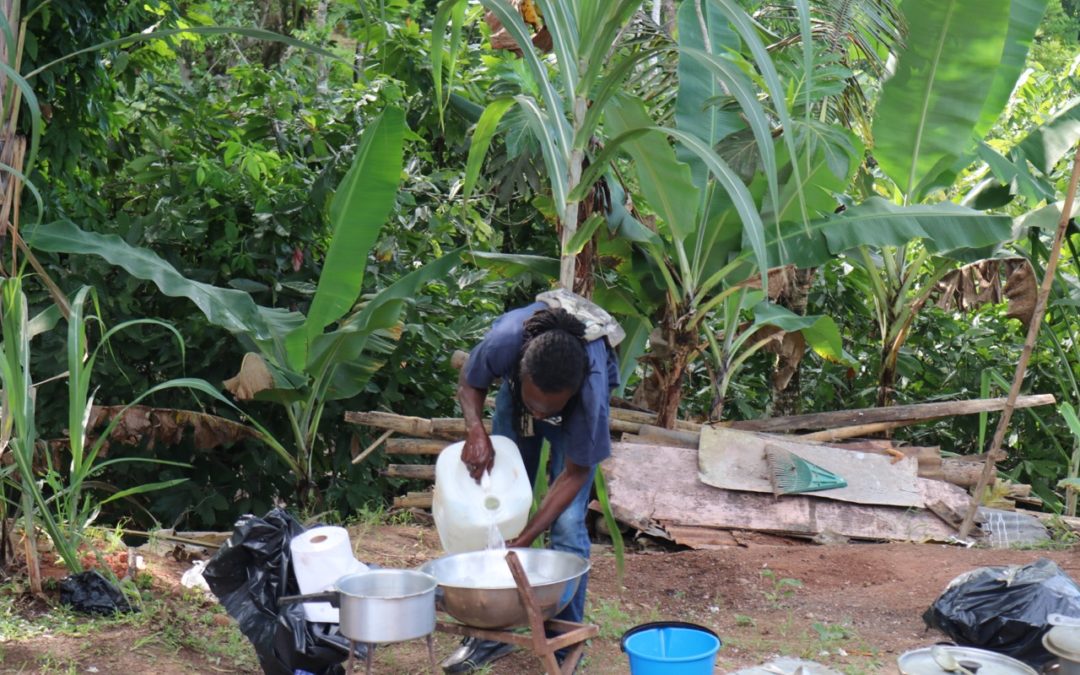
I was recently privileged to be a part of our family reunion where we went back to our roots where our maternal parents and grandparents lived. It was really different because there was no running water. However we got water from the nearby spring. Being there was very nostalgic since I lived there at one part of my primary years. During my quiet times, I wondered how we survived without some of the basic things in life – running water or electricity. Vivid memories flooded my mind including having to go to the spring to get water to do many essential things that many may take for granted today. I thought of going to the river to wash clothes and at times bathing. As a farmer, my grandfather would plant various crops like sugar cane, oranges, coconuts, coco, coffee, ginger, yams of varying names and textures. I was fortunate to witness the planting as well as the harvesting of these crops. Some of the crops were cash crops while others were for our consumption. There were also livestock, including chickens, cows, goats and pigs. My grandfather at times would slaughter various livestock and sell to the neighbors in the community.
There are many people who would not like to remember where their origins are because the memories are so painful and they would prefer to bury them. Quite frankly, I understand their reasoning, but for me they’re my roots and the experiences helped and molded me into who I am today. And I would not say that life was great and stress-free. I am sure that they are people who would say that they are now glad they are out of the situation that they grew up in and would not want to go back now that they are successful. They might be irritated they had to experience the poverty and dare I say, the humble beginnings. Some of the memories are so cemented into my mind that I can’t forget them whether good or bad. I am truly convinced that they made me stronger and weren’t meant to demean my humble beginnings. I guess when I was sent to spend time with my grandfather, during my primary years to teenage years, I didn’t think those were wonderful years. But now that I am older, I have learned to appreciate those foundational years. I know that my grandfather was a vital and invaluable part of my upbringing. As such, I have learned to never forget where I came from, but never to let it hold me back from where I want to go.
 Some of us (including some family members) have sought ways to remove or refrain from remembering the struggle of their childhood days – especially if they see them as too painful or violent for that matter. I can’t say I blame them but can say, “different strokes for different folks”. Still there are others who might associate their childhood days as confusing, lonesome, or filled with rejection and they prefer to escape from or drown those memories.
Somehow as an educator, I have been thinking of how the students would eventually think about the impact that I have made on my students’ lives. It is my hope that they will never forget me as a motivator and that I played a vital and invaluable part in their lives. I really would like them to feel that even though the lessons and experiences were sometimes difficult they will help to make them who they will be in the future. I have often thought that through lessons I can share part of my early childhood stories (where appropriate) so students can identify with me and feel that they are not alone.
Since the teacher wears many hats and one of them is that of providing a home (in the classroom) for students, then the hat includes making the classroom a home where the heart is. No matter what one accomplishes, one must never forget how one began. That enables one to have enough confidence to hold his/her head up high, but also enough humility not to look down at others. As Ralph Waldo Emerson stated, “A great man is always willing to be little.”
Education and Success
by Marcia Davis-Dawkins | Dec 18, 2018 | Education, Kids, Parents, Teachers
Family is Everything
By Dr. Marcia Davis-Dawkins
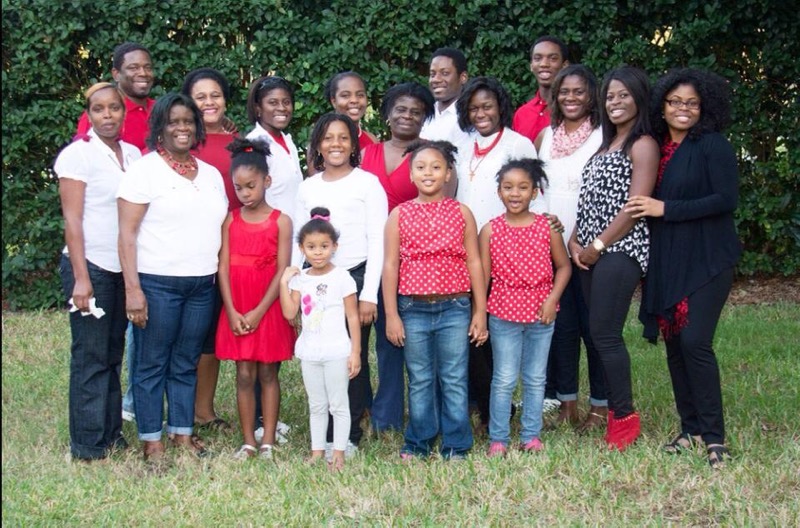
Holidays are centered around family. I have always been a person who loves and enjoys being with family. When I was growing up, one of my friends said that “I wasn’t a family person” simply because I didn’t grow up with my mother and father like most people do. I don’t think I ever got over that statement. In fact, a few years ago, I sought clarification from the friend only to be told that he was immature and never understood me. For the record, I grew up with my aunts, who were both teachers and might have steered me in the direction of being an educator. Most people don’t know or understand the reasons children don’t live with their parents and are quick to pass judgments. But does that mean that they are not living in a family or that they don’t desire a “traditional family” life? How do we define ‘family’? Most people define a ‘traditional family’ as a married mother and father along with biological children living in the same house. We might also say that was once upon a time – since there are so many new ways to define a family these days. However we define family, it should include being supportive, understanding – being there to help with homework, attend school events among other things.
Never Underestimate the Power of Family
Now that I am older I can say I was a tad bit embarrassed to admit that I was not part of a “traditional” family and even more embarrassed that it was a single parent family. It seemed almost like a crime or a sin to me! With age comes wisdom, however, and I have come to realize that my family may not have had it all together, but together we had it all. Despite missing the conventional cast of characters, my family was there for me through the best of times and the worst of times. Many things change during the course of your lifetime, such as friends, jobs, your morals, your style, but the one constant is family. They provide for your emotional and physical needs without you demanding it and stand by you. Their presence ensures that you will be loved for the rest of your life, no matter what.
 I often wondered how my students felt growing up in a single family home, especially since for me I had the experience of my friends growing up in the traditional married parents family. Because of that I always empathize with my students who would tell me secretly that that lived with their aunts, grandma or others who were not mother or father. I always felt the need to assure them that it was okay and that it was not the end of the world. It is also such a sensitive topic when the situation is that the parents are deceased and the lessons are centered around family discussions or activities, such as when we are reading Sarah, Plain and Tall by Patricia MacLachlan, where the mom in the story is deceased. The story’s theme explores loneliness, abandonment, and coping with change. Then there is that time when it’s Mother’s Day or Father’s Day and the activity is to make something for the parent, who unfortunately, is deceased. As
  educators we have to be mindful of these situations and know our students and know their backgrounds and ensure that we plan our lessons carefully. Family is everything, but we cannot allow our students to feel left out. We should make them feel like our classroom is a family setting and help them to cope through the difficult times that they may encounter. We cannot replace blood relatives, but can be that “family” that is a valuable resource for helping them through onerous times. Knowing this support system is available to them offers the security they may be lacking at home. Never underestimate the power of “family,” the most important gift in our lives.
True Friends Never Part
by Marcia Davis-Dawkins | Dec 3, 2018 | Education, Kids, Parents, Teachers
Where Have All the Flowers Gone?
By Marcia Davis-Dawkins
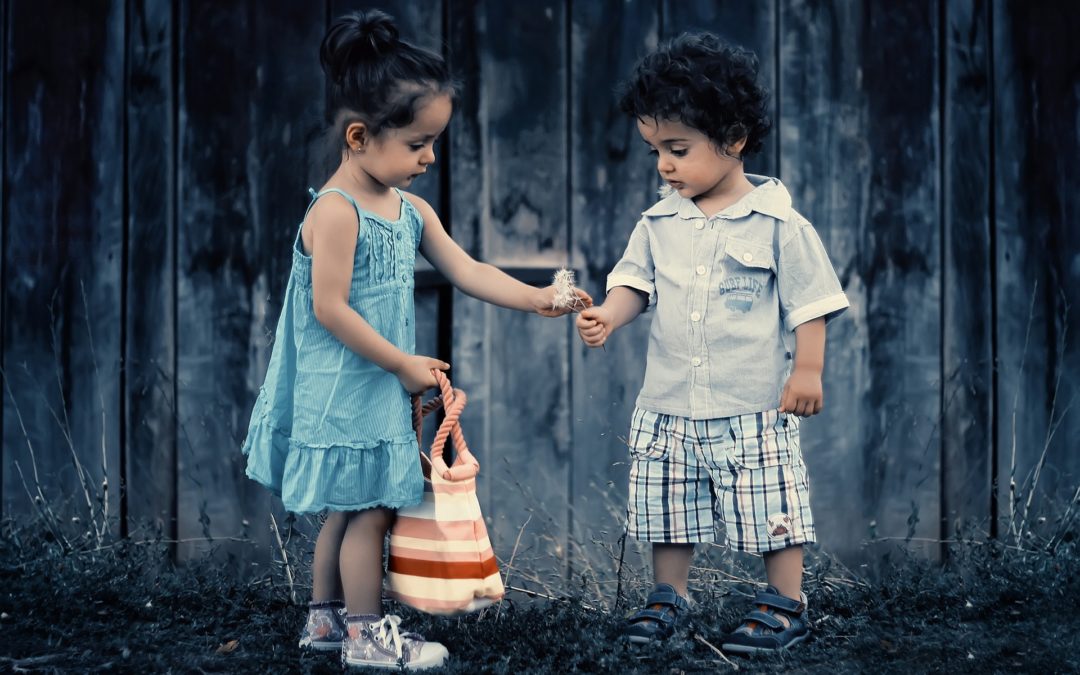
In a world where we can be anything that we want, I strongly believe that we should strive to be KIND! Kindness seems to be a word that is disappearing from our vocabulary and dare I say the world. It’s so easy to see others in sadness and prejudge them and assume they “deserve” the sadness.  Sometimes things happen in our lives and the first thing we say is that we will get back at that person who harmed or hurt us. I recently parked and dropped my daughter off so she could take care of some business. We had planned to go somewhere else after so I would simply wait in the car. Since I know how crazy life can get I usually park far away so I won’t get hit by another car that’s parked close (or is trying to park next to me). On this day I watched this woman park so close, that as she opened her door, the wind blew the door and it swung open and hit mine! In my mind I knew it was bad because I heard and felt the impact. Well, the woman simply re-buckled her seat belt, pulled in her door and was ready to move off with no apologies. I rolled down my window and beckoned to her then mouthed, “You could have said sorry!” I thought, “Wow, no one cares, Marcia, just suck it up and live with it.” But as I took a breath and composed myself, my thoughts went further, “At least I am okay and she might not be!” She could have been dying inside but I also wondered, why kind people have become a rare commodity in life. Did I intimidate this woman? I could have called the cop and she saw that I was in the car. Or was I invisible?
How can we (educators) ….
This was actually day two of my demise. The day before I couldn’t get access to a building because my ID “was miscoded” as per a security personnel hours prior. After several attempts, I saw another security officer who watched me fail to gain entry to the building. I got out of my car and moved towards his car to get further instructions and he drove off! My anger brewed, but I held my composure because I didn’t want to seem unprofessional. I wanted to make it right as I was not sure who was watching and how my reaction would impact that person who was witnessing the event. I really am trying to make a more positive impact. Interestingly, I thought of two Bible verses I learned a child– first, “A soft answer turneth away wrath, but grievous words stir up anger.” Proverbs 15:1 and the second, from Philippians 4:5 “Let your gentleness be evident to all.” I also thought that even though the education system does not build its principles on the Bible, they are worth pondering. I could not help but wonder how can we teach our students to be kind and be conscious of what they say to others? How can we (educators) make a difference in students’ lives or even our colleagues’? How can we help to make them into “flowers?” There are so many moments of hate, war, meanness, bullying and such. We must remind our students and ourselves that while it is easy to be mean and hateful, it takes true strength to be kind, especially to unkind people, who, in all likelihood, are the ones who need it most.  When you have a bad day, attempt to treat the world better than it treated you. Greatness is not in what we have, but what we give…give kindness and watch the garden flourish.
The Teacher Who Makes a Difference!!!!!

by webmaster | Nov 19, 2018 | Education, Teachers
One Step At a Time
By Dr. Marcia Davis-Dawkins
I recently saw a student taking the steps to go to the second floor and he was taking them two by two. I saw catastrophe heading his way, so I quickly told him to take one step at a time. I began to use this as a lesson to myself and thought of sharing the lessons learned from watching that student. How often, as educators, do we see this happen? What are some of the lessons that we can learn from this simple notion? The first thing that comes to mind is in our personal lives. Let’s say we want to lose weight – the first thing we think is that we want the weight off now or very soon, yet we didn’t stop to think that it won’t happen immediately, that it takes time. It means exercising and eating healthily so we can make the adjustment. Losing the weight will not happen overnight.
Another lesson…
Another lesson is that at times our students want to read or learn a skill instantly and they get so frustrated because they are impatient. How do we as the educator and mentor encourage them? I think depending on the student, we can share our stories with them and tell them that there is hope and it is not the end of the world.
Most of us tend to want to get somewhere hastily, but with all things it takes patience, diligence, discipline and self-control to attain a desired goal or place. It might mean falling or failing at something, but then we can re-start, re-assess and make changes that can be fundamental. We live in a world where it is fast-paced and everyone is in a hurry to get to the top or somewhere. I was listening to the news recently where an elderly 78-year couple went shopping in New York City and was returning home. As the train that they were going to take stopped, one of the passengers who was exiting the train, bumped into the male (couple) and the elderly person fell and bumped his head. The elderly woman watched as her husband lay motionless on the ground. Little did she know that he was dead from injuries he received to the head from the fall. Sadly, the person who bumped into him looked back at them but kept on walking!  This example showed how in our busyness, we are just in a hurry to get where we want to go, but there is very little compassion for others. We literally step into others’ paths or even step on them and not care what happens next. I know the story may seem far-fetched, but how can we as educators teach our students to slow down and take one-step or even one day at a time? This can be especially difficult when the world in which we live is so fast-paced and dictates that we get everything instantly through fast foods, fast cash, microwave dinners, or even fast degrees online. Let us remember and also teach our students that slow and steady wins the race, and we should take one step at a time, even when things seems laborious! Remind them to focus on one small change at a time. Over time these small changes will add up to big transformations. Drill into them that slow progress is better than no progress and while they may not have reached their goal yet, they are closer than they were yesterday. Keep stepping!!
One Day At A Time, One Student At A Time
HOME