How many times have we heard the expression, “Follow your dreams”? At times it just seems so overused and meaningless. In this 21st century, we are always competing for several things, especially jobs. Life simply feels stressful because of the pressures we face. At times it feels as if self-talk has to come into play to dig us out of life’s ditches. Self-talk can help us to have better self-confidence. One of the things that we should invest in is a gratitude journal where we can write down what we are thankful for and appreciate what we sometimes take for granted. If we have a gratitude journal we can also begin our day with positive thoughts.
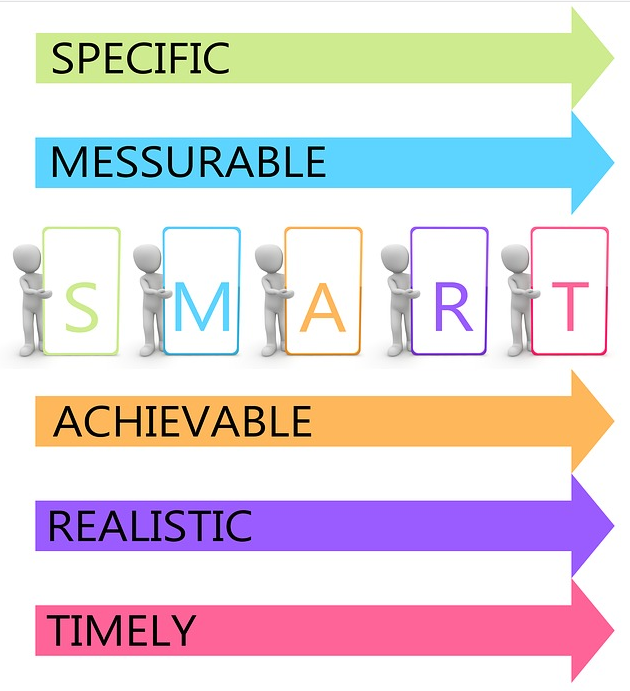
S.M.A.R.T
On a whole, we have to accept who we are and teach people to love us. We should love ourselves as well as set standards and morals for ourselves. We have to learn to appreciate who we are before we can appreciate and love other people including our students. We should dream big and set SMART goals. S.M.A.R.T. goal is defined as one that is specific, measurable, achievable, results-focused, and time bound. Own and Hone your craft – be passionate about what you do (your passion should be in line with your purpose). Evaluate your path and progress. Stay focused no matter what the issues or the problems. We should be the best that we can be and realize that success doesn’t come overnight but we should begin our journey without fears.
Accept Yourself
Psychotherapist, Margarita Tartakovsky lists 12 Ways to Accept Yourself:
Set an intention.
Celebrate your strengths.
Consider the people around you.
Create a support system.
Forgive yourself.
Shush your inner critic.
Grieve the loss of unrealized dreams.
Perform charitable acts.
Realize that acceptance is not resignation
Speak to your highest self
Be kind to yourself
Fake it til you make it
As educators, we can help students set goals and if and when they fall off course try to get them back on track. Keep encouraging them because there is something good within all of us. We should let the our mantra be, “If a task is once begun, never leave it till it’s done. Be the labor great or small. Do it well or not at all.”
In all likelihood, probably no adult is more trusted by children who have been abused than a loving, caring teacher. Teachers have the unique opportunity to identify abused children and start the healing process. To do so, however, they must be able to discern the signs of a child in distress.
We often think of pain and hurt as physical phenomena, or as the presence of uncomfortable feelings. Pain and hurt, however, encompass more than just concrete affliction. This is best witnessed in the case of emotional pain. Larry James once said, “Emotional abuse is just as damaging as physical abuse. The only difference between the two is with physical abuse you are wearing it on the outside for the world to see and the other is felt deep inside. Others cannot see the bruises on your heart.”
As educators we have all seen students suffering from emotional maltreatment. These are the students who are constantly belittled and rejected and who endure the absence of a positive emotional atmosphere. They may be verbally abused or have inadequate parenting, sometimes bordering on neglect. They may be secondary victims, those who have witnessed firsthand domestic violence and even death of a family member. As such they demonstrate delays in emotional development and manifest immature behavior.
One of the most noticeable forms of abuse is physical. This expresses itself in the presence of bruises, burns, broken bones, or even internal injuries. These injuries are the result of slapping, punching, hitting, kicking, pushing, etc. These children are often easily startled, and often cringe in situations they consider fearful.
We have all had students who are obviously physically neglected. They may appear malnourished, lack adequate clothing, have poor hygiene and just seem to have no one who is concerned for his/her well-being.
And then there are those students who we suspect are being sexually abused. They may have been molested or exploited and lack the emotional and developmental ability to understand what has happened to them.
Teachers
Often, as teachers, especially novice teachers, our focus is on teaching and learning. We are not trained as social workers or psychologists. Our goal each day is the intellectual advancement of our students. As such, we scratch our heads and wonder in frustration why this student doesn’t complete homework, why that student falls asleep in class, why another shows no interest at all. We do not take into consideration the baggage each child carries, the obstacles they face each day, their struggle to just survive. We wrongfully write them off as lazy or disrespectful, when instead we need to delve into the reasons behind the behavior and become their biggest advocates. We cannot sit on the sidelines and say that’s not what I was hired to do. Students are entrusted in our classroom for a reason—never by accident.
To offer support, we as teachers must be approachable so that students feel it is safe to tell us their stories. Actively listening is one of the best tools. School can be a place where children can rebuild their self-esteem, assert themselves and see themselves as successful. Abused kids often feel powerless to control much in their environment. Allowing expressions of feelings through art, music and creative writing helps release pent up emotions. Pointing out a student’s strengths helps one to gain a sense of self-identity and bolster self-esteem. They learn that they are valued, accepted and belong.
Additionally, Insight Learning, which is based in problem solving is particularly effective with abused children, as is Narrative Therapy. In this approach, children are helped to identify their values so that they can confront the problems they face.
Many times, in the situation of abused students, teachers are their only lifeline and reprieve. Let us realize that they are crying out to us for HELP and rise to the occasion. Don’t observe and do nothing. Your action can save lives!
This Bible verse is seen as a reassurance for us. It sends a reminder that there is hope in times of trouble. What is trouble? Trouble can come in many forms including pain, distress or problems. In a world that is ripe with strife and stress, it seems that we are perturbed daily. There is reassurance for us through this bible verse that encourages us not to throw in the towel and give up hope. As optimistic educators we have to be the support system that may be the ray of sunshine on a cloudy day in students’ lives. Reassurance stipulates that issues will be resolved and that we should not live in fear. How can we avoid living in fear? We can start by being in the presence of people who are positive and avoid those who might weigh our minds down.
As educators we have been called on to comfort parents who send their students to school under our care, confident that the students will be safe, will be nurtured and will learn. Yet, in today’s society that confidence is constantly challenged by the proliferation of gun violence and disarray in schools.
Many times we think that trouble is guaranteed because we don’t get the desires of our hearts, or we don’t get the students we “prefer.” We have to constantly remember that nothing lasts forever. We have a set of students for a time, so we have to be the best that we can be for that set of students. One of the things that I have always said to my daughter whenever she had an issue with a teacher/professor is “Do what you can to get through that class because you won’t have that class, teacher/professor forever.” I have gotten to the point where I share the same thing with my students as they complain bitterly about a subject or a teacher. I encourage them and give them a vote of confidence in what they do and inspire them to have good work ethics.
Hope also sends comfort, but the fact is that fears may dominate our lives. However, we have to have positive attitudes so that students may embrace and replicate our positive energy. The lyrics to one of Rev. Timothy Wright’s song says,
“Weeping may endure for a night
Keep the faith it will be alright, right right
Trouble don’t last always”
Digesting the lyrics and allowing them to marinate will allow one to worry less and think more positively.
Whenever a New Year begins people often reflect on the past year and set new goals that they want to accomplish. The intention may be to lose weight, eat healthy, begin college, or start a diet, among many others. Whatever it is, it usually calls for will power, self-talk, motivation or simply encouragement from friends or family. It takes some inner strength and dogged determination to achieve the goals which were set.
Motivational Speaker Jessica Cox
Take for instance, Motivational Speaker Jessica Cox. She has defied all odds by turning obstacles into accomplishments. Jessica Cox was born without arms as a result of a rare birth defect, but that has not stopped her from being a dancer, a swimmer, and driver of a car. Astonishingly , she drives a car without having to use her upper body. She uses her feet like most people use their hands, enabling her to drive an unmodified car with an unrestricted license. She can also type on a keyboard at twenty-five words per minute, pump her own gas, and to put in and remove her contact lenses. Additionally, she is a certified SCUBA diver. Jessica Cox also has her Sport Pilot Certificate for an ERCO 415-C Ercoupe, designed in the 1940s, which the Federal Aviation Administration has designated as a light sport aircraft. The plane that she flies was built without rudder pedals. Instead, the rudder interconnects with the ailerons through the yoke. This unique design allows Cox to control the airplane with one foot controlling the yoke, while the other foot controls the throttle.
After reading about Jessica Cox and her accomplishments, there is hardly anyone who can say that they wouldn’t be able to achieve whatever they conceive and believe. In a previous article, I discussed what it means to do self-talk . There is power and life in the tongue. Speak success into your life. Once there’s life, there’s hope. We should encourage each other with positive vibes. The sky is the limit and as educators we have to incite ourselves,as well as our students, to reach for the sky.
I Can
Jessica’s story has shown us adversities and challenges should not prevent us from trying and doing our best. Once we put our minds to accomplishing something, we can do it since we say “I Can” is in the phrase “I Can’t!” In the long run, challenges turn us into better people. How can an educator or a parent encourage a student or child to follow his or her dreams? We could help and introduce students to SMART goal setting, When we set goals they will be motivated, purpose will be improved and attention will be more focused. As educators we must give students positive feedback. Be a role model and use words that inspire and compliment. A single word can change a student’s life or dream. New year, new beginning ! We can redirect a student’s path to positively. Let us also walk in newness, strength and boldness! Remember as Napolean Hill once said, “Whatever the mind can conceive and believe it can achieve!”
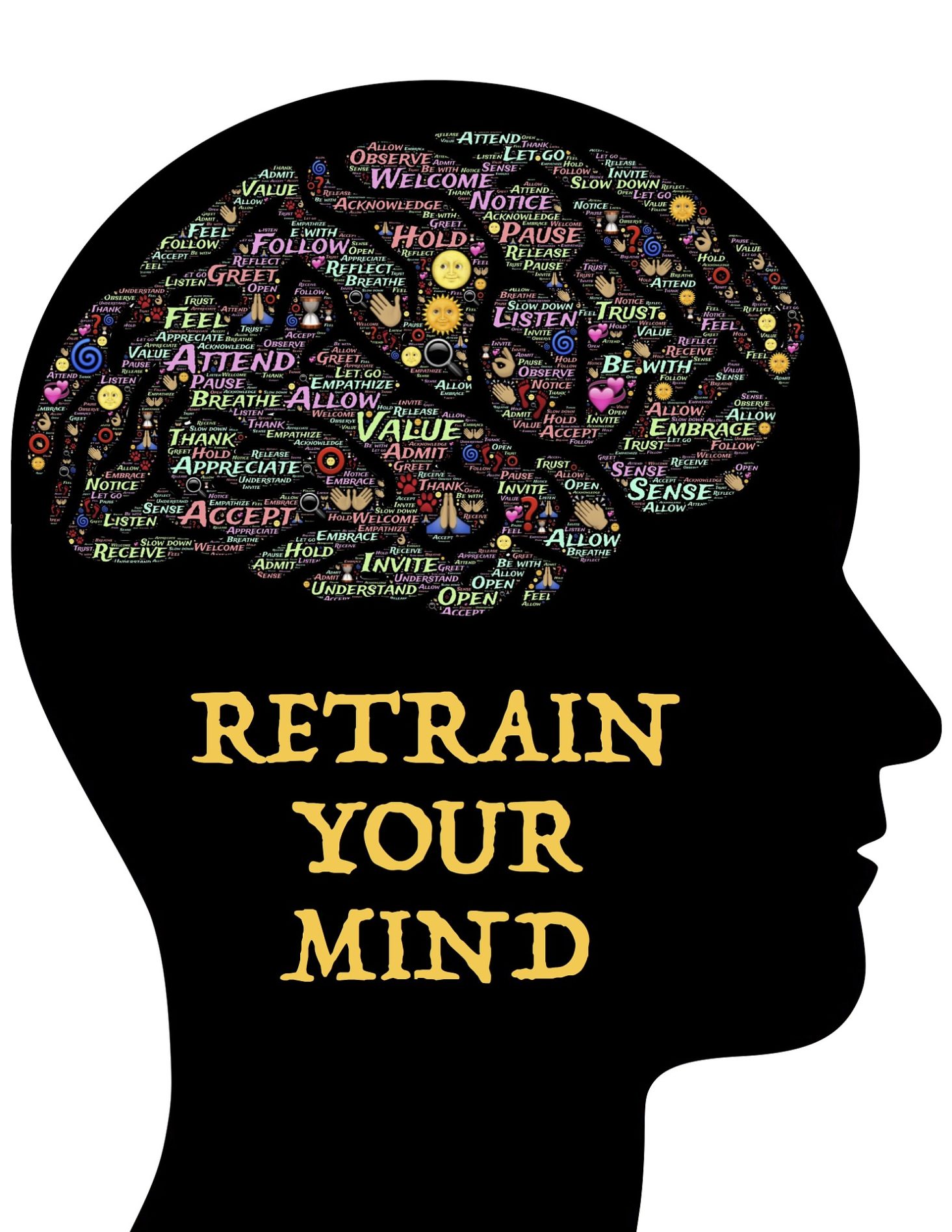
In one of my recent articles, I discussed Differentiated Instruction, which is the method in which a teacher anticipates and responds to a variety of students’ needs by adjusting and teaching students to the way they learn. In other words, a teacher might have a classroom filled with twenty students and each of those students learns differently. Therefore, within that classroom, he/she will have different styles and tactics of teaching them by either modifying the content, adapting the process of how the material is taught, or redefining how students demonstrate their learning. The way the brain is wired varies from individual to individual, and contrasting parts of the brain are ready to learn at divergent times. In other words, what seems easy for one person/student might be challenging for another. LEARNING can be DIFFICULT for many people!!
In an article written by Deborah Farmer Kris she quotes “But Barbara Oakley is a self-described ‘former math flunky’ who ‘retooled’ her brain — and who has since made it her life’s work to help others learn how to learn by explaining some key principles from modern neuroscience.” She emphasizes, “…the field offers educators many techniques that are rooted in brain research, such as deliberate practice and interleaving. Like Oakley, it is our job as educators to encourage and teach students how to slow down and actually absorb what is being taught. ” We all know so many students who rush through their work just to be finished with it , regardless of the quality or outcome. They must be reconditioned to have patience and understand that ALL things are difficult before they become easy, and that it doesn’t matter how slowly one goes, as long as one does not stop or give up. Taking what Oakley describes as “brain breaks” along the way plays a vital role in the learning process.
As educators we have to take into account the various learning styles of students. Learning styles impact the way we learn and process information. Research has shown that various learning styles use different parts of the brain. The brain uses the following learning styles to process information:
Visual (spatial): prefers using pictures, images, and spatial understanding.
Aural(auditory-musical): prefers using sound and music.
Verbal (linguistic): prefers using words, both in speech and writing.
Physical (kinesthetic): prefers using your body, hands and sense of touch.
Logical (mathematical): prefers using logic, reasoning and systems.
Social (interpersonal): prefers to learn in groups or with other people.
Solitary (intrapersonal): prefers to work alone and use self-study.
Sometimes as educators, adults and parents, we crush students’ and even some adults’ dreams because we tell them that they are not good enough or that they are wasting their time chasing a dream. Instead, as educators, we have to encourage our students and help them identify the way they learn in order to be successful. We simply need to ask ourselves the question, “Do we encourage students to find their learning styles and then break down the learning styles so students are successful?
Below is a copy of Oakley’s article to which I referred .