by Marcia Davis-Dawkins | Apr 10, 2020 | Education
Dangerous Disturbances

By Dr. Marcia Davis-Dawkins
Music has always been a source of inspiration, a time of reflection and motivation and I recently heard a song during the dreaded COVID-19 pandemic that we faced and I thought of how disturbed this virus had made us. The song, titled “Dangerous Disturbances”, by a Jamaican Reggae group called Chalice, refers to reggae taking over the world and I thought how interesting that it is indeed a shock how the human coronavirus has literally taken over the world.
Because of this virus, everything has come to a halt. Well carved out plans, which were put in place months and years ago, are disturbed. Plans that have disturbed our peace of mind and sent us scurrying and wondering what next. This dangerous, disease came and disturbed us in so many ways. It brought about scarcity of common household items including paper products, cleaning items, disinfectants and variants of food.
Teachers are collaborating and gathering ways of teaching from home. Who would have thought that this was possible for teachers, especially for elementary teachers, to be working from home? What a challenge this has been. The same invisible disease has incited fear in so many of us in us on a global scale. Well, new things are happening and 2020 – a leap year too, has been disturbed in many ways. With teachers working from home, parents are forced to become teachers and educate their children.
It is sad realize that some students will not get the support from some parents and we wonder how they are surviving – we know that there are students who definitely need teachers to encourage and support them. There are students who are desperately seeking love, kindness, wisdom and understanding from many of their mentors and may not receive. We often think of those students who have stopped learning and are distracted by various entities within their home environments and wish they could be in the school setting. For some, school is a part of their regular schedule and may even comfort them.
Students who may have been preparing to take state tests or final exams have plans that have been disturbed. These exams would have determined which student would be promoted to the next level of schooling or the next level in life. Suddenly, these plans are simply wiped out.
As educators, we are grateful for technology that is available. This technology gives us opportunities to encourage learning, as well as to teach virtually. I recently saw that one person even referred to this form of teaching as “quaran-teaching”. To top it off, there is a definition that states “teachers scrambling to prepare for digital learning with zero training, funding, or assistance, for an undisclosed amount of time, for parents who have an equal amount of preparation.”
For whatever it is worth, I hope that this dangerous disturbance is bringing, a sense of connectivity and most of all love in the family. Families that are isolated and quarantined are often too busy to even talk to each other have finally received the chance to truly get to know one another in this time of crisis. Dangerous disturbances cause us to pause and reflect on our lives and to think of those around us. Interestingly, the disturbance didn’t affect a certain, race, color, creed or country – everyone was disturbed! 
Students and teachers who are confined in their homes and fearful and tend to feel hopeless, but I certainly will not encourage it. There is a sense of hope and love among each other. The educators are hoping that even though we are not connected physically, there will always be a way to connect virtually; there will always be a way to put our hearts in it. As the late Country and Western singer Kenny Rogers, would say, “When we put our hearts in it, it can take us anywhere, and who’s to say that we can’t make it, it’s the same dream that we share.”
There are many questions we may have, but in the end, we will be drawn closer to each other and assist our neighbors, families. So many losses, so many broken promises, so many broken plans – plans that are simply wiped out (disturbed) because of the pandemic. Amidst our challenges, though seemingly disturbing, is a hope that we, as educators, can send wonderful messages of encouragement to our friends, families and students. Hopefully we will find the good in the disturbance.
Even though there are fears, fears of not knowing enough for an exam, fear of what is going happen to students, or just fear of the unknown, we can see that there is a silver lining behind the dark cloud. This disturbance is giving us a chance to be attentive to our way of life, our way of teaching and the hope is that; our students’ families are able to get to know their family members again through bonding and talking to each other. They can read, play, be creative and problem solve together. The idea is there is a sense of support and renewal in the family. Most of all, the dangerous disturbances usually help to discover and reveal the true us. Through the educators collaborating, there is a new sense of community, creativity and shared responsibility. We are all in this thing together and we will work things out. We are in solidarity!
Fear
by Marcia Davis-Dawkins | Mar 24, 2020 | Education, Kids, Parents, Teachers, Teens
Generational Impact – What is Your Legacy?
By Dr. Marcia Davis-Dawkins
February was Black History Month in some countries, including the United States of America. Throughout the month, time was set aside to highlight and celebrate some notable history makers in our lives. At times, it seems as if we only celebrate certain people while omitting others. Maybe we can’t celebrate everyone, but at least highlight a new person or two, and not continue to celebrate the same every single year. Maybe we should celebrate people who make a difference in our lives daily and not simply wait for February. This could, no doubt, help students to learn to celebrate and feel good about themselves.
It really takes a village to raise a child and even though some period don’t believe that we can and should say anything to children in the 21st century, it really makes a difference when you do have certain people in the village who are still willing. A few months ago, I lost a colleague, a friend and a mother figure to me. It was sudden and unexpected. This loss hit, dare I say, “Like a ton of bricks!” I knew she was sick, but I kept praying for the best, or plainly put, for her to come through, I believed she would recover and come back to work where we would sit and exchange wise and pleasant talks about human nature and how we could help shape some of our troubled students. The weight from the bricks sent me in a downward spiral because I soon realized that she was really gone and we weren’t able to talk again. Needless to say, I miss her warmth, her wise talks, her understanding and calm sense or twist on a bad situation? Well, even when things just seemed unbearable, this friend/colleague/mom would speak wisdom into my heart and make me realize that “we must look on the bright side of life.” In fact, I can envision her sitting up in her chair, moving her neck from side to side and then saying, “Dr. D, let’s see what this means and how we can get another perspective.” It is as if changing her stance and moving her neck were the signal that she was getting more wisdom to pass on to me.
This person I cannot claim for myself, because she represented the same “idol” to so many other persons. Truth be told, she was like that to so many other people and, in particularly, to the students at the school where we worked. Students would get in trouble and be sent to the principal’s office and she would be a ray of sunshine to the students. As a matter of fact, it seems as if some students wanted to get in trouble and be sent to the office so they could get some of the “good wisdom talk.” The fact that she was able to mold and mentor them simply made my heart melt, and it didn’t matter who the student was, she saw potential, possibility, and promise in that student. Her calm spirit, her presence, her elegance, her aura, her demeanor were evident when she was around.
At school, she was honored during Black History Month, and while this effort was laudable, I would propose a somewhat different approach. She was an ardent proponent of the Amistad initiative and pressured the school board to make it a reality. If we truly want to honor her legacy and continue her work, we must TEACH WHAT SHE PREACHED. In place of a memorial that will come and go, ensure that black history is an integral part of the curriculum, all year long, not limited to a shallow exercise during February and then abandoned. Reject merely teaching about historical “ firsts,” such MLK, Rosa Parks, Jackie Robinson, etc. While every student should, of course, recognize these people, limiting lessons to this leads students to believe that Black History consists of a few heroic characters. Focus on and highlight the often-unacknowledged contributions that so called “ordinary” people of color make EVERY day. In doing so, her passion lives on, long after the plaudits and commendations of a memorial fade.
It is my aim that I am able to leave a legacy that would make this person proud and that people will remember me for my sense of peace and kindness. That somehow, I am known for the fruit that I grew based on the seeds that were planted or sowed. Did I spread good news or spread love and peace just like my former colleague? Did I spread the good news to my students or people that I meet, to imply that they were special in their own special way/s?
I, without a doubt, want to hear the words as quoted below:
“If it falls to our luck to be street-sweepers, sweep the streets like Raphael painted pictures, like Michaelangelo carved marble, like Shakespeare wrote poetry, and like Beethoven composed music. Sweep the streets so well that all the hosts of heaven and earth would have to pause and say, “Here lived a great street sweeper.” ~Dr. Martin Luther King Jr. addressing the Jamaican crowd in the National Stadium in 1965.
(Source: Dr. Rebecca Tortello, Pieces of the Past ~ The Gleaner)
I want to be the sowers of great seeds so others reap beautiful and tasty fruits.
Family is Everything
by Marcia Davis-Dawkins | Mar 4, 2020 | Education, Kids, Parents, Teachers
Love and Care; From Our Youths to Our Nursing Homes
By Dr. Marcia Davis-Dawkins
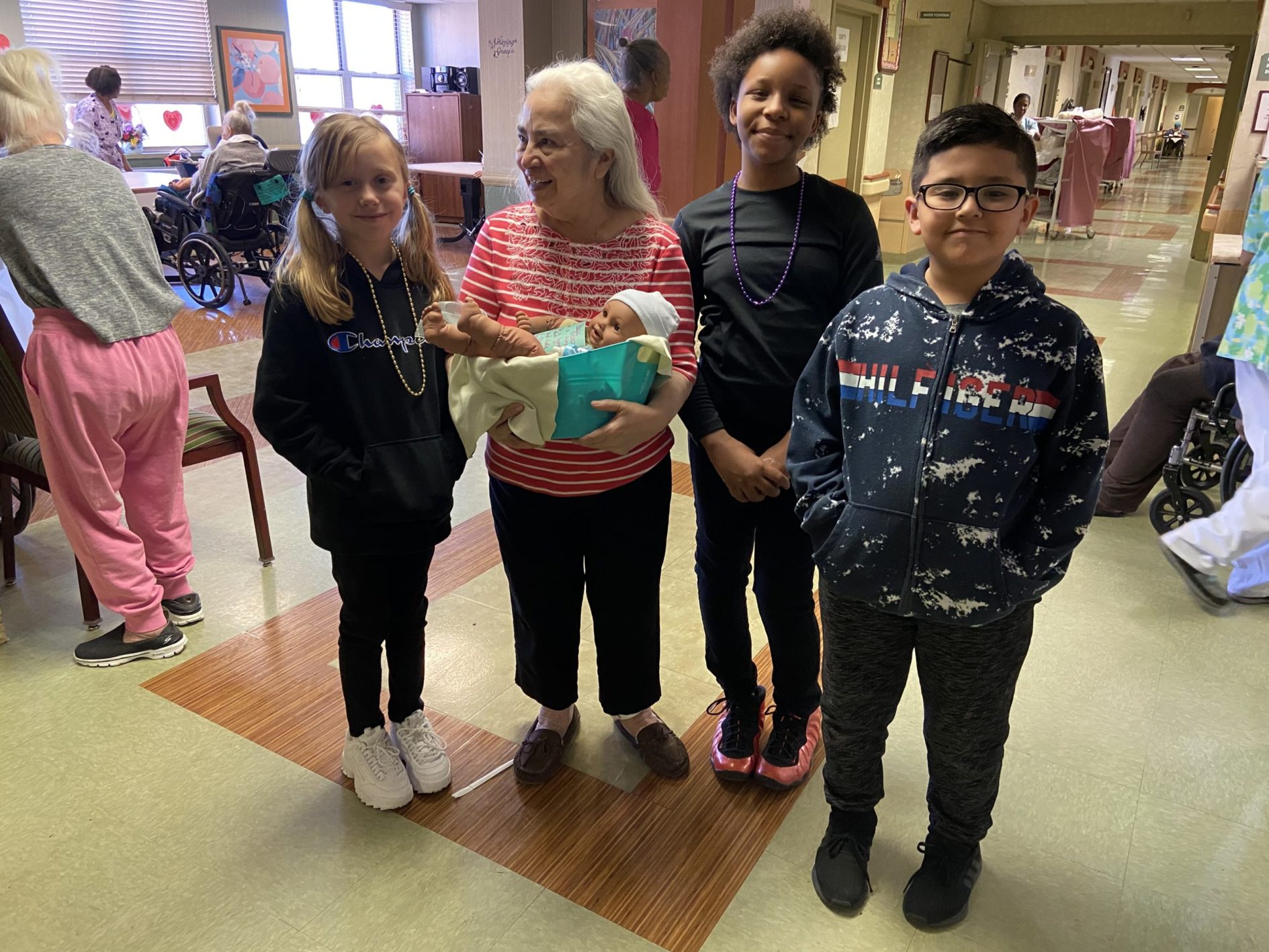
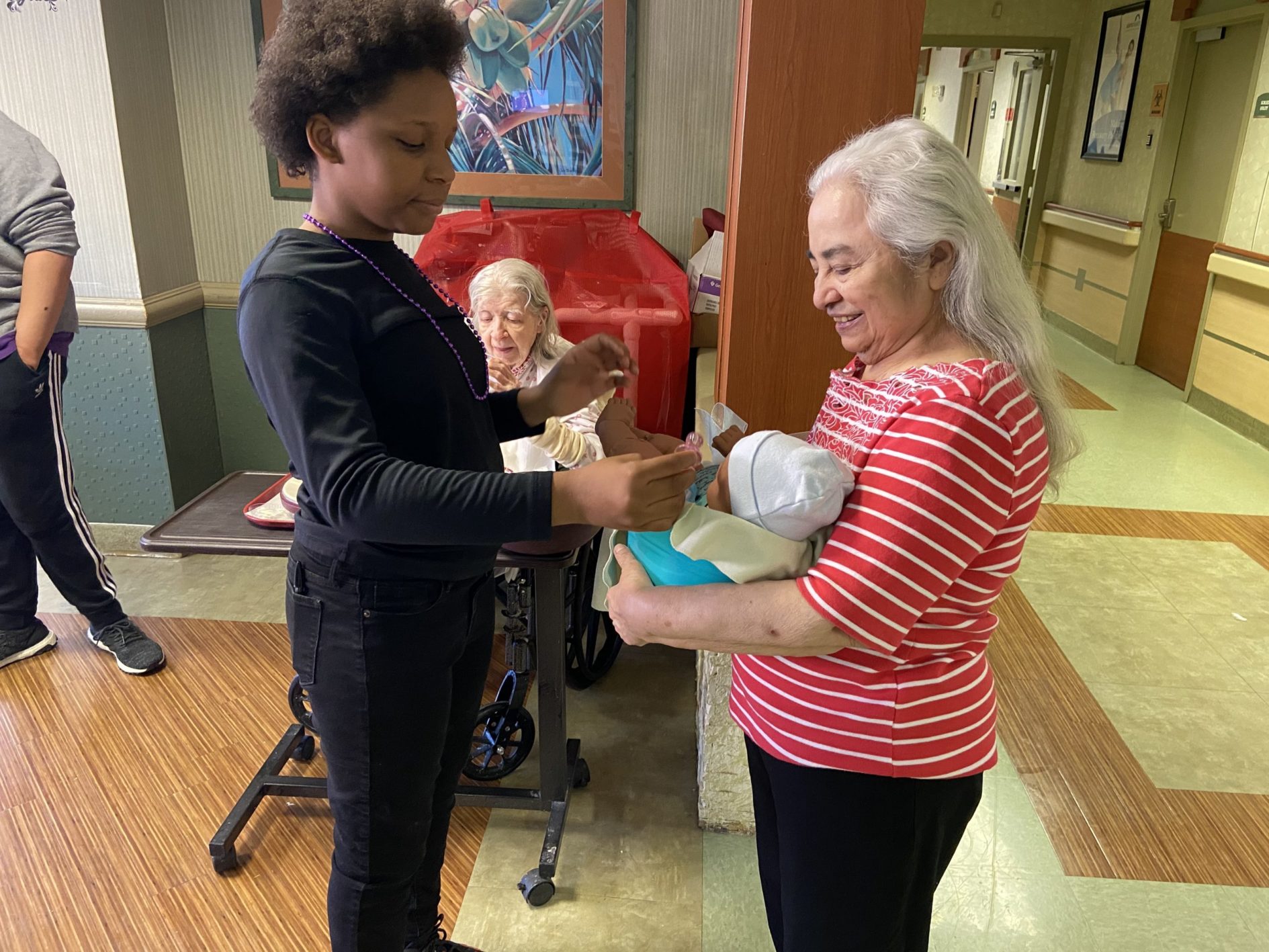
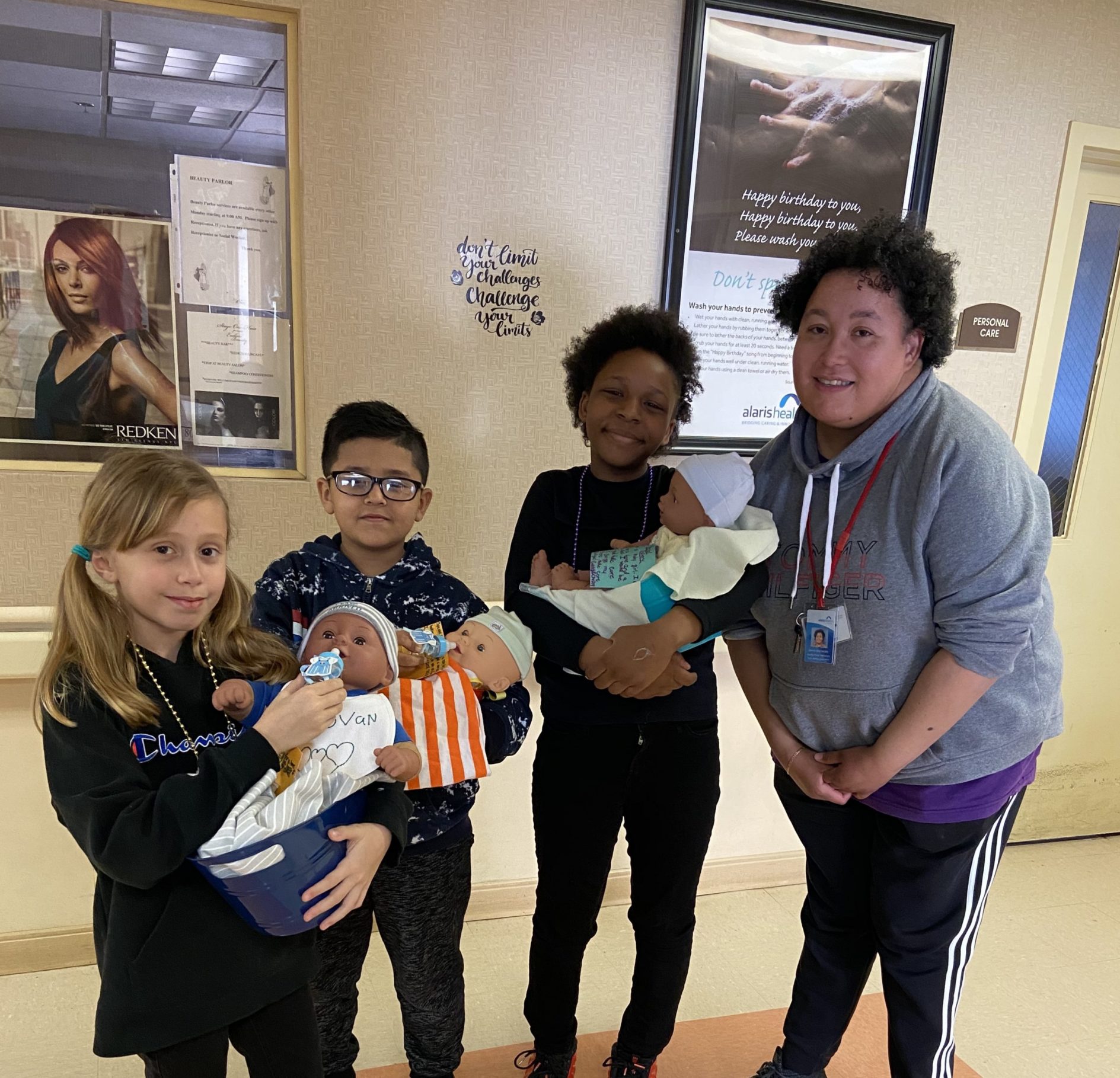
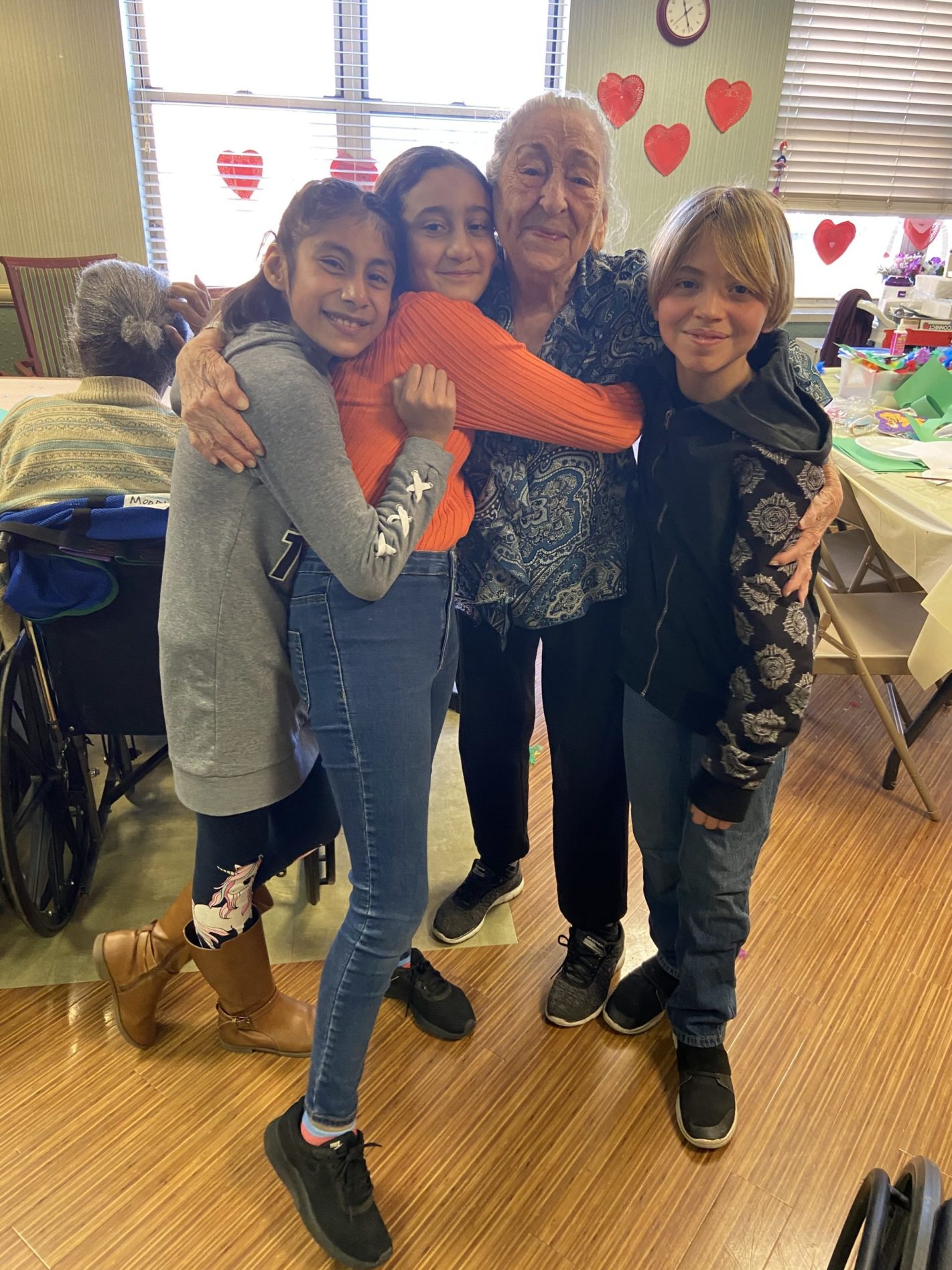
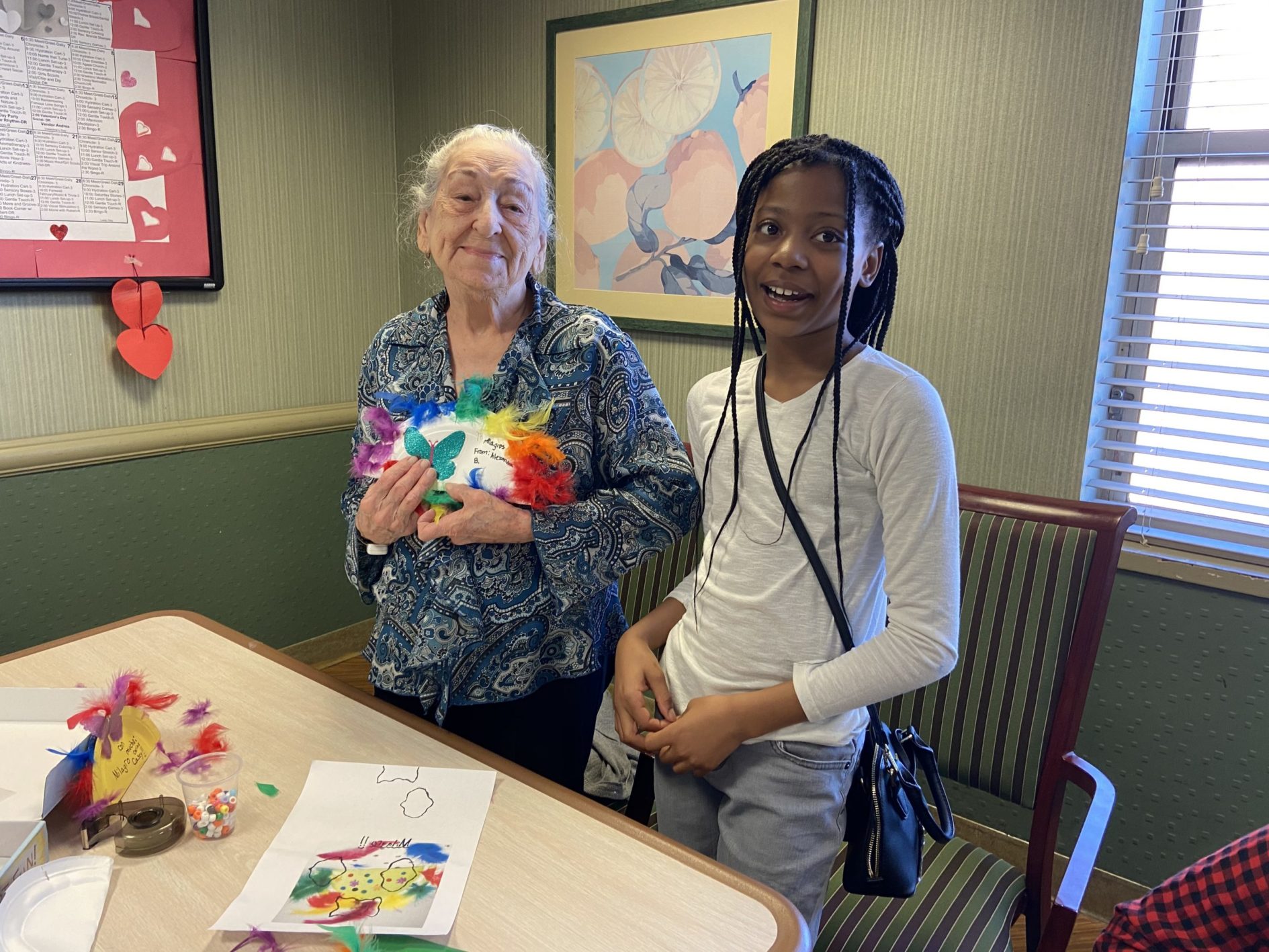
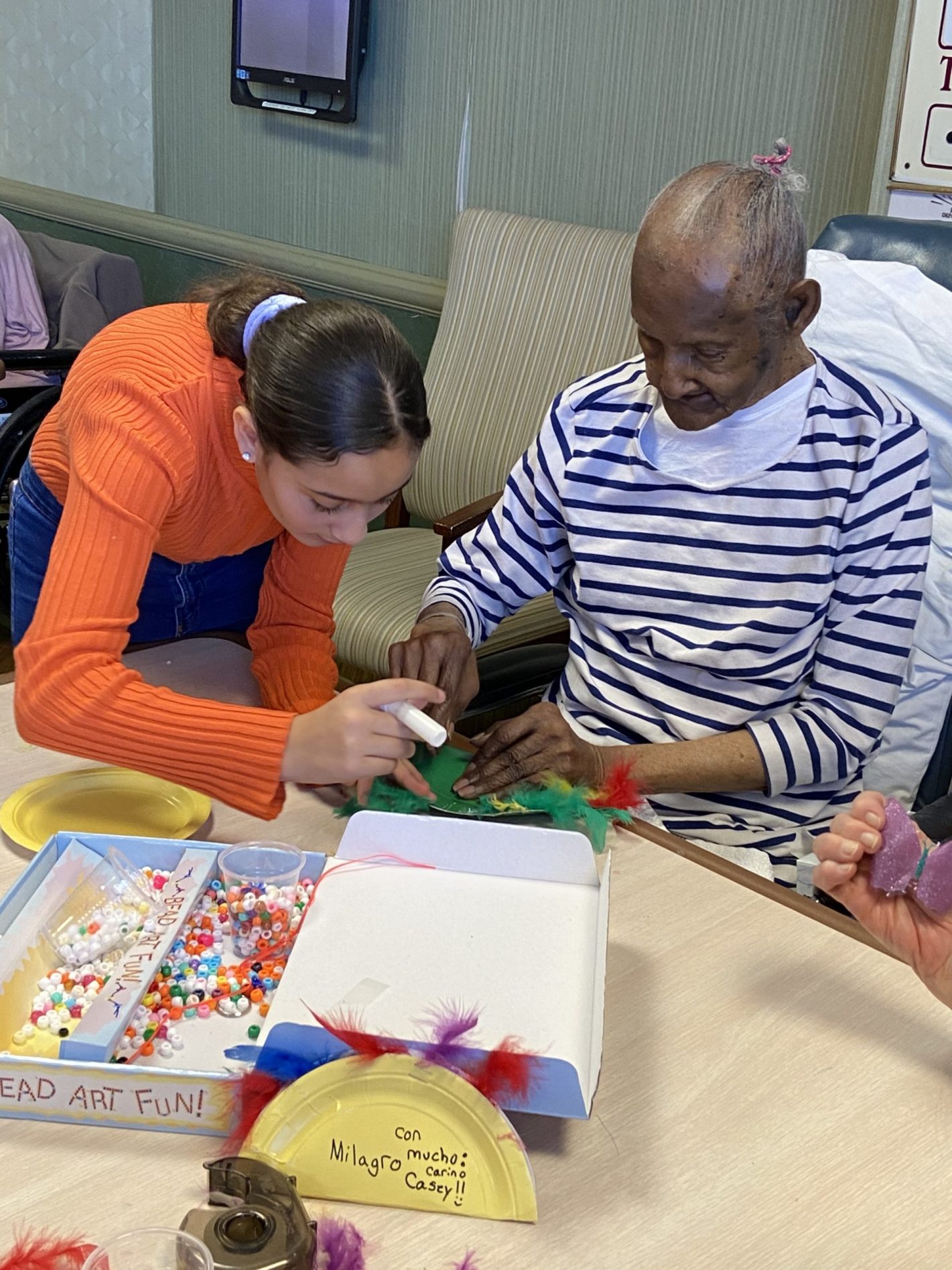
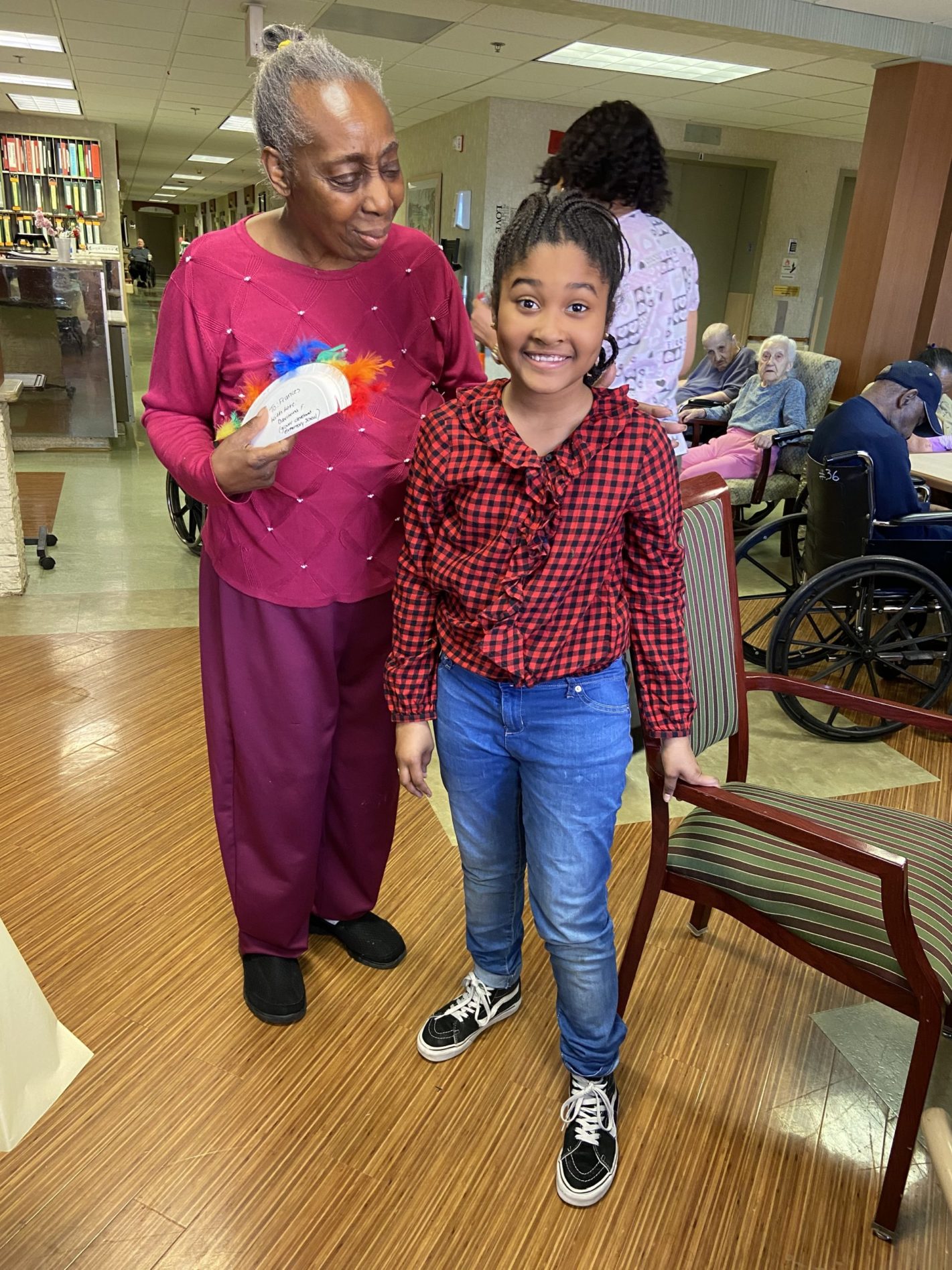
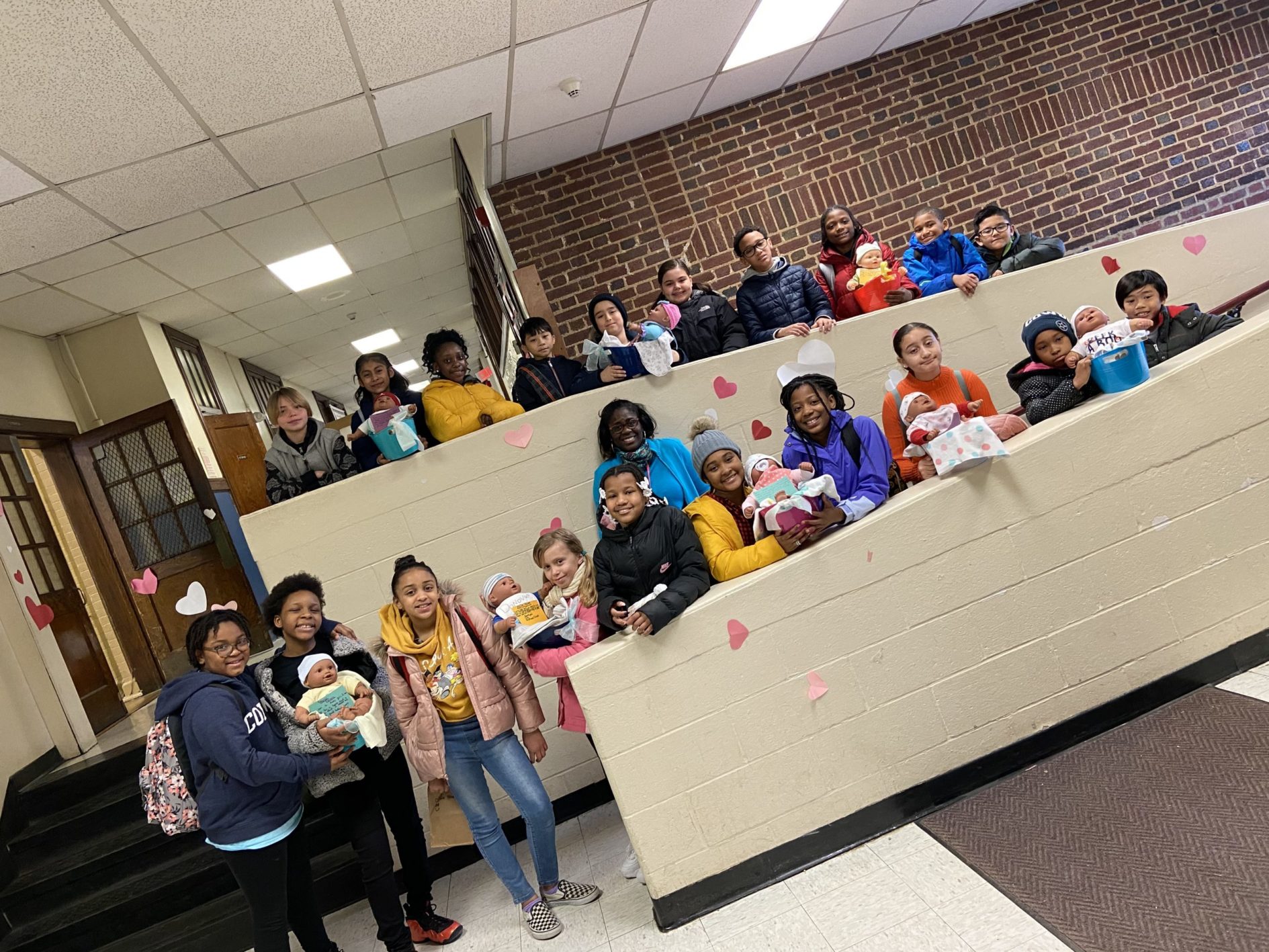
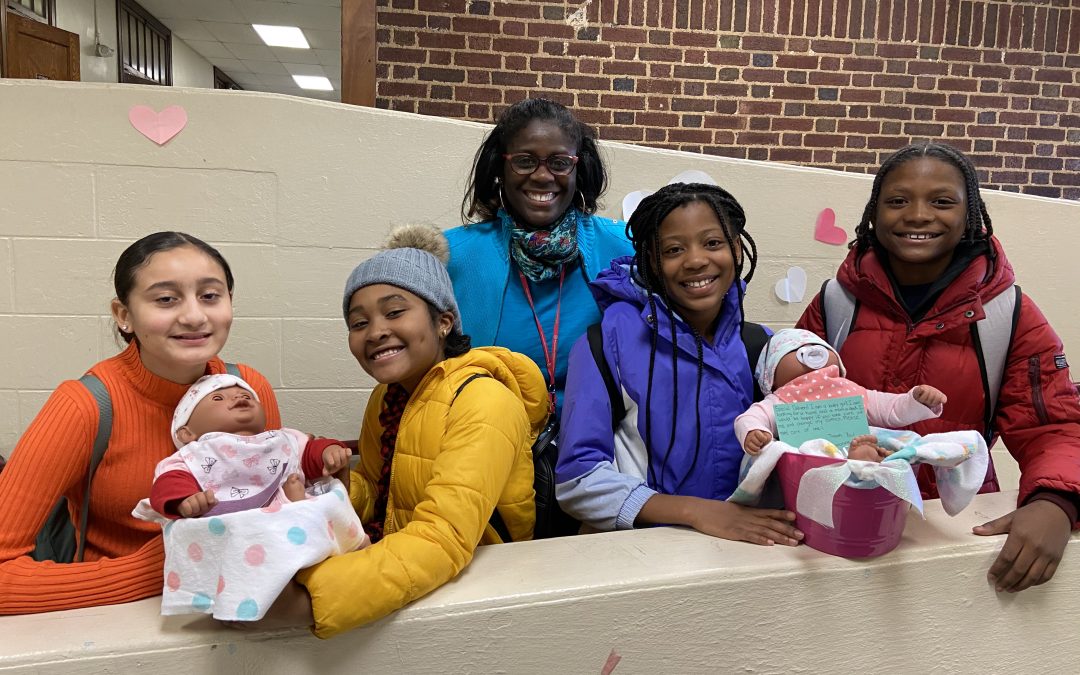
Recently the Student Council Advisors (including me) took the members of the School’s Student Council to a Nursing Home close to our school. We are teaching students that they should value all ages in our community, from the very young to the very old. But the oldest in nursing homes and assisted living facilities suffer from dementia and Alzheimer often feel isolated and excluded. Developing stronger connections between older adults and students in the community can have tremendous benefits for both residents of these facilities and students. The student council was involved in The Cuddle Care Project, which offered students the opportunity to make a difference in an older person’s life, while instilling respect for elders, sensitivity for others different than themselves or in need, and lessens self-centeredness. This was accomplished by providing patients with therapy dolls that will become an integral part of their lives.
As many as 90% of seniors with dementia or Alzheimer’s struggle with some sort of distress, due to the disease. Caregivers try to ease the burden by giving patients life-like dolls to love and care for. The dolls become an integral part of a senior’s life and caring for the doll as they would care for a baby becomes a major part of their day-to-day responsibilities. Doll therapy, also known as cuddle therapy, may bring back some happy memories of early parenthood and help seniors feel useful and needed. Studies demonstrate that this therapy can be used to increase positive behaviors and decrease negative behaviors in users and is an effective approach in caring for seniors afflicted with dementia. Baby dolls can calm someone who is upset, provide endless hours of hugs and smiles, lull a person to sleep, create a distraction from an upsetting event, provide a tool for interaction, regenerate warm, nurturing feelings and make it possible for someone totally dependent on others to care for someone else.
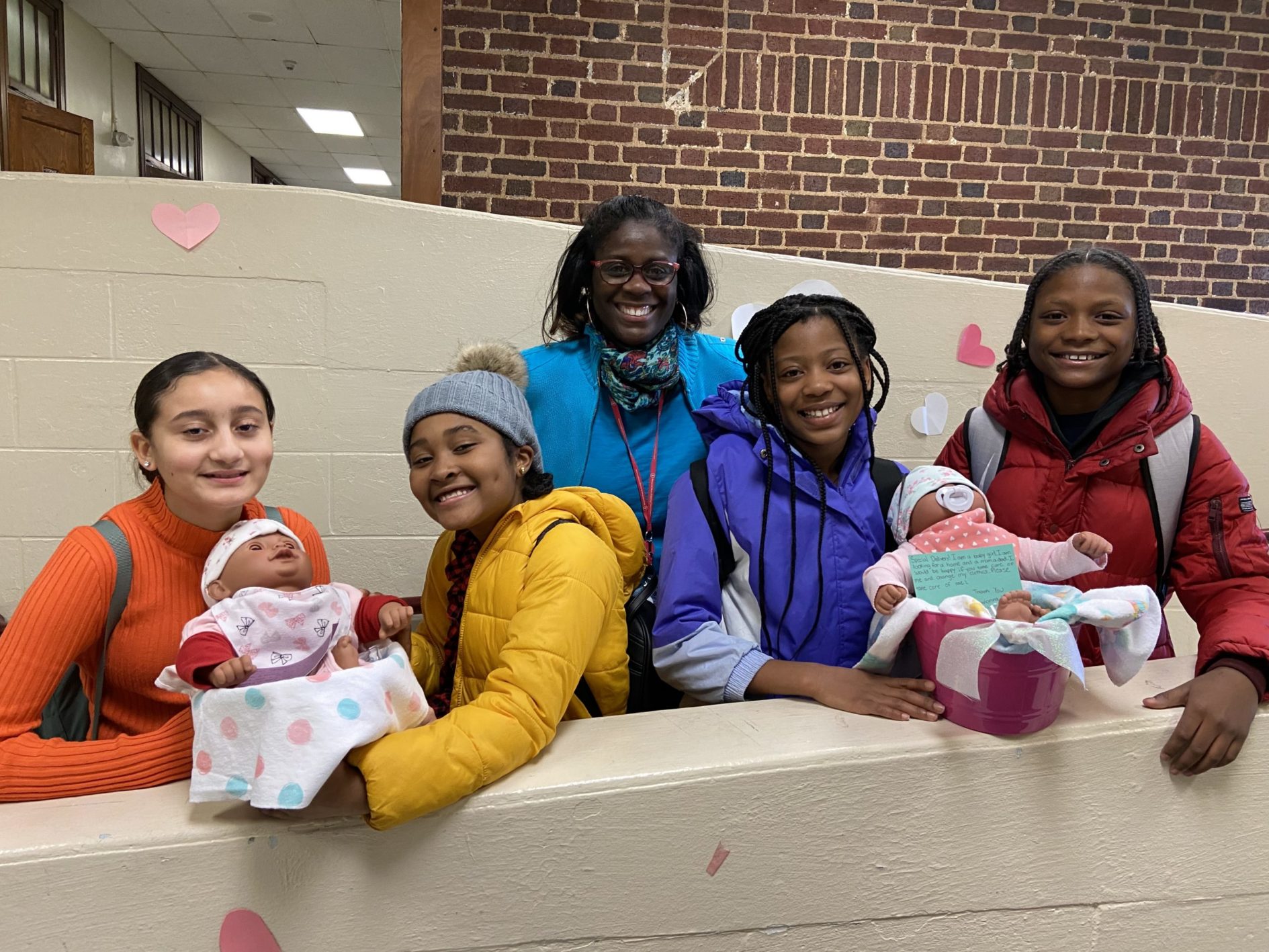
Students read The Sunsets of Miss Olivia Wiggins by Lester Laminack. This is the touching tale of a woman who resides in a nursing home and who seems to live more in the past than in the present. This book gives voice to the often silent tragedy of watching a loved one slip into the clutches of Alzheimer’s. A discussion was followed focusing on the needs we all have regardless of age: to feel useful, needed and wanted, targeting the relevance of these needs among individuals who are elderly. Students were then introduced to the project. They prepared dolls for distribution to elderly. Students dressed dolls, wrap in receiving blankets and placed in carry all. They also chose an extra outfit as a change of clothing for elderly to utilize on doll. There were eight dolls, five of which were provided by the Rahway National Council for Negro Women (NCNW), those were presented to some residents of the Nursing Home.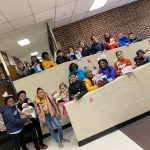
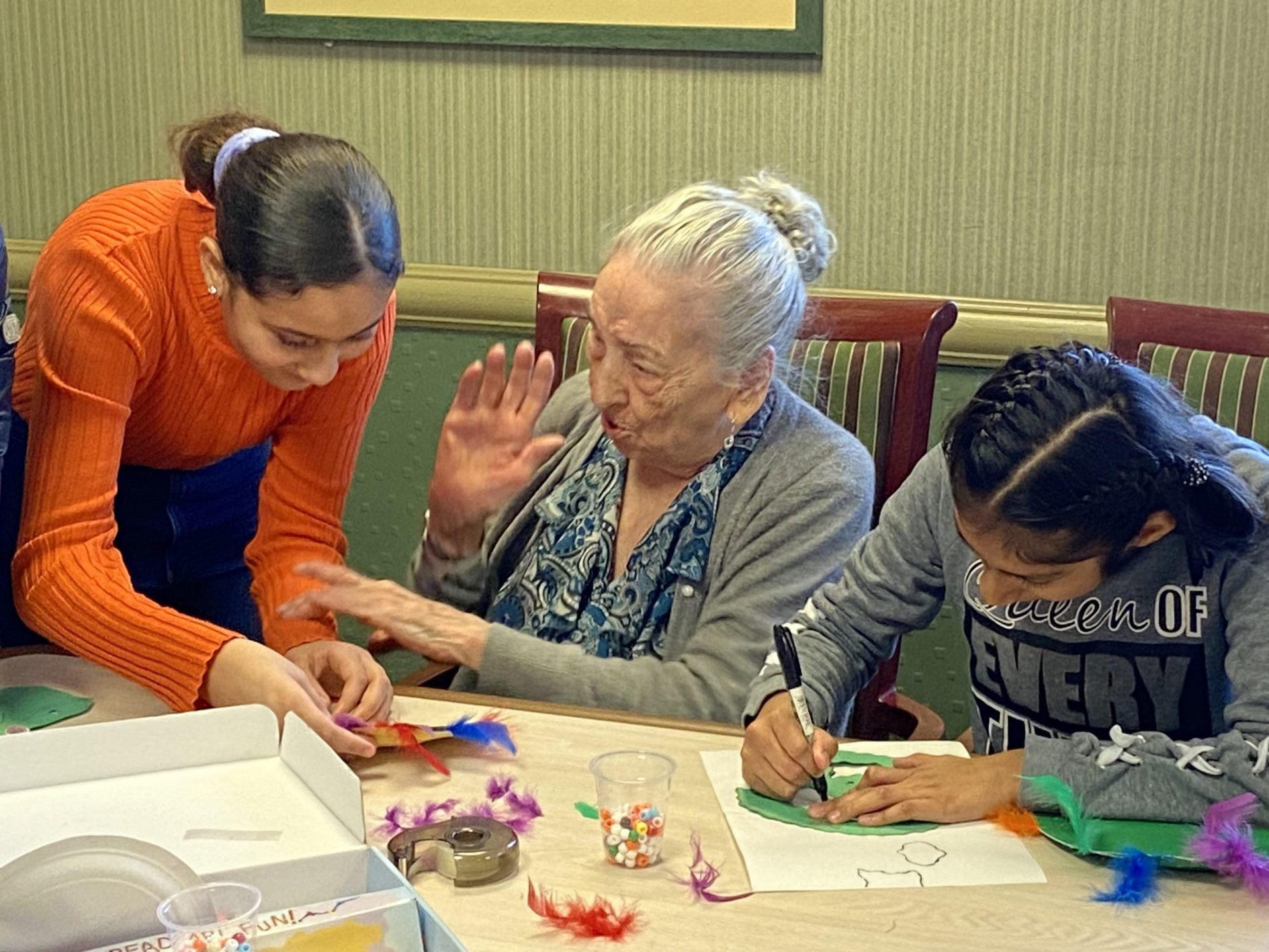
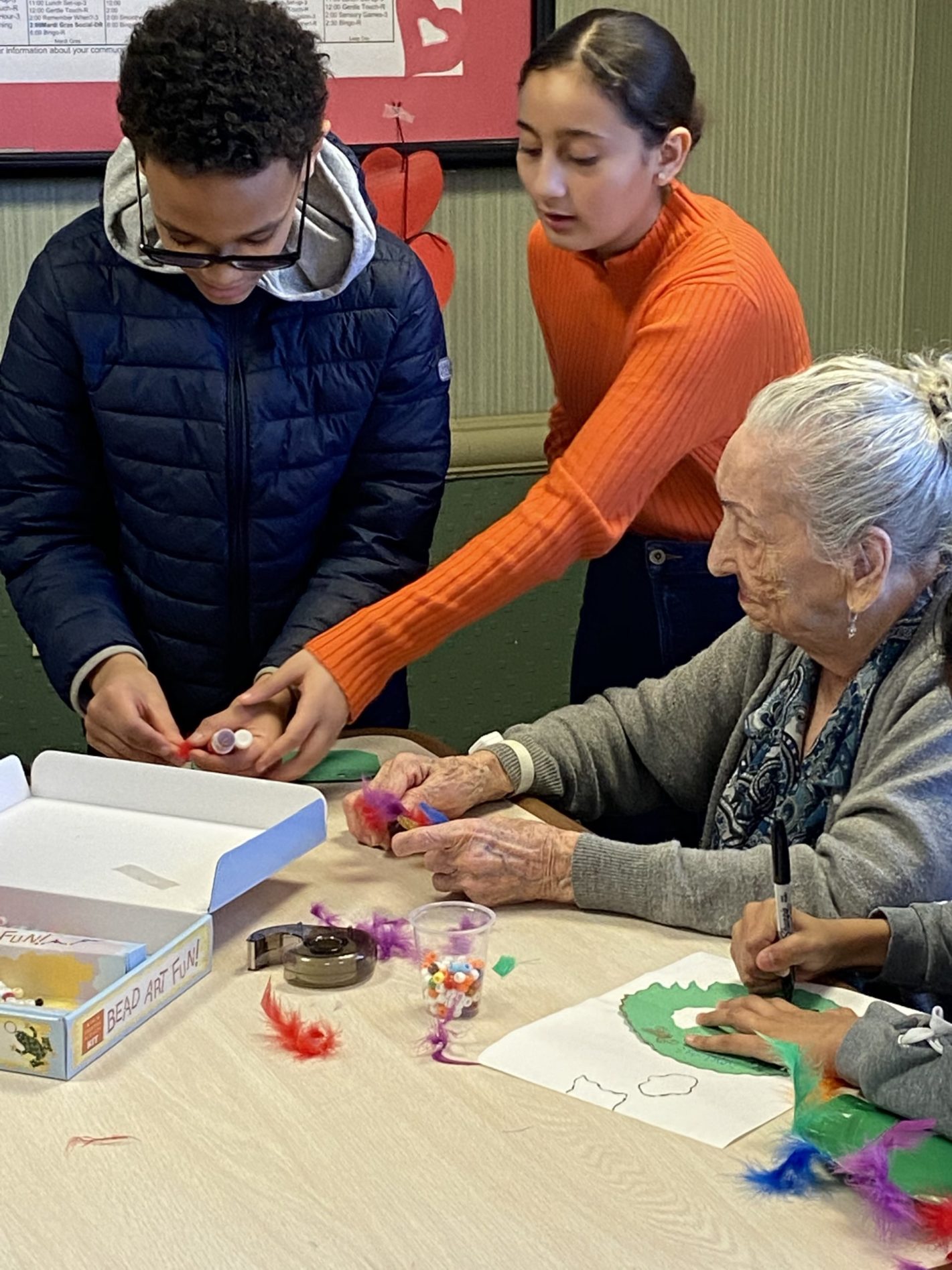
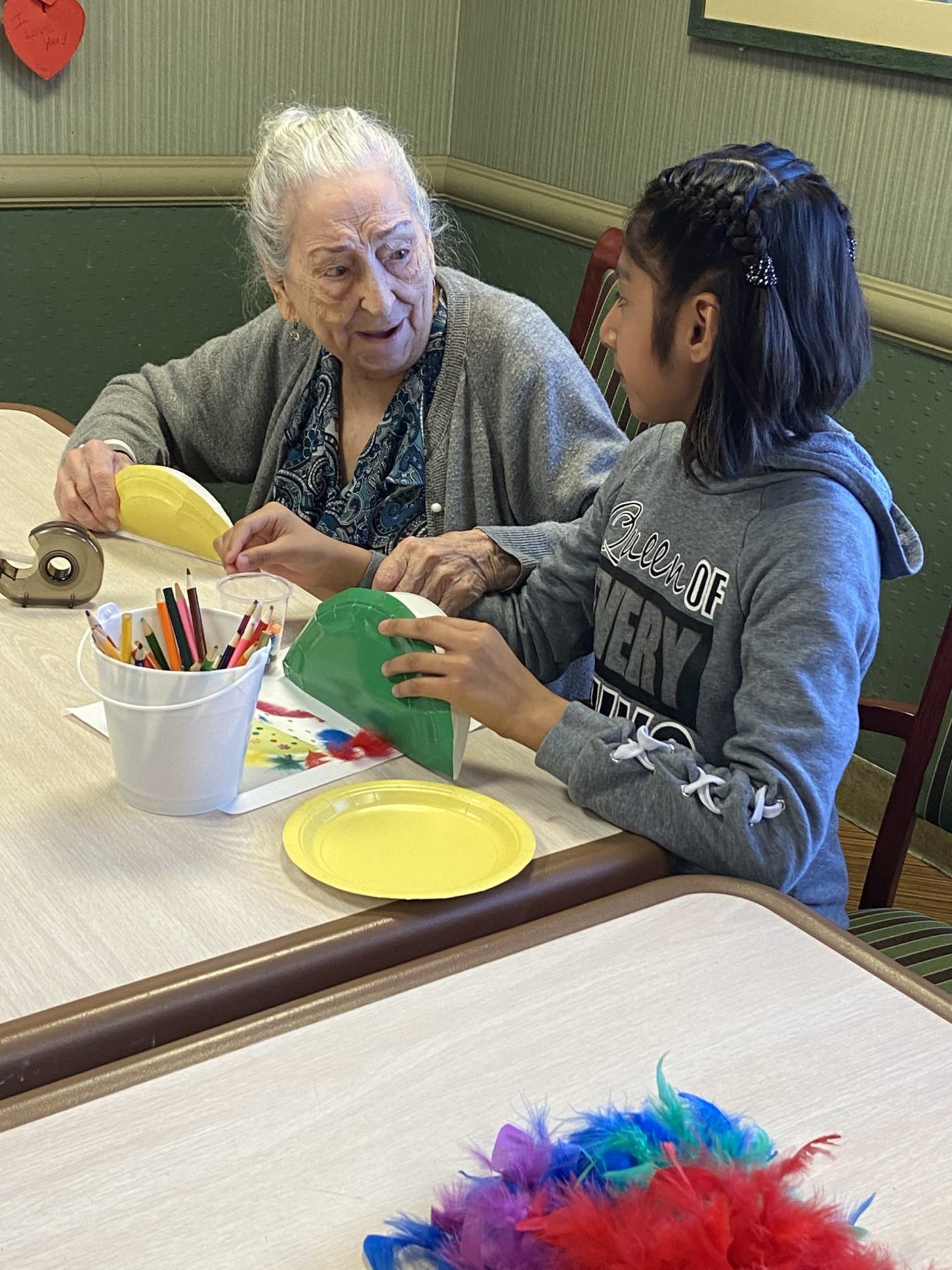
This project exposed students to the informational topic of Alzheimer’s, which can be dry and clinical when solely read about. The doll project, visitation, and subsequent discussion brought the subject matter to life. This project also presented an awesome opportunity for intergenerational relationships, and is a great way for students to get a different sense of perspective and context of history through communication with elderly. When students visited the Nursing Home, they were able to interact some of the patients and made crafts with them. The patients along with the students made crafts and there was definitely a positive interaction with both sets of parties. The smiles the patients’ faces spoke volumes when they received the dolls (their babies) to cuddle. Patients were particularly happy since they rarely received visitors. Students also asked patients if they could give advice to a younger them what would it be. To which one of the patients responded that he would tell them to be a leader not a follower because they could end up in jail. Another student asked, “What was your fondest childhood memory?” One patient’s response was that, “She enjoyed visiting her grandmother’s house.”
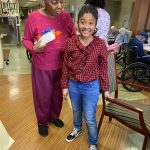 The students learned how to interact with people other than their peer group and learned responsibility and civic duty. While their work on the doll project remained anonymous to the residents, it instilled in them the value of making a difference in someone’s life and emphasized the importance of volunteering. One of the students when asked what was his favorite part of the trip to the Nursing Home, his response was, a beautiful woman at the Home was asking him questions about what he was going to do in the future that he told her stories about her life. She had a big smile on her face. She was also very strong.”
According to one of the Activity Aide, “The residents are very happy because they were engaging – they used their tactile, visual, verbal and a whole lot of love. Patients loved the interaction and the special attention they received.” This was also therapeutic for them. It also showed students that it is good to be compassionate to everyone – both young and old.
To quote President Obama:
“We celebrate the selfless individuals around our country who channel their civic virtues through volunteerism… devoted to a cause bigger than themselves…. Volunteers help drive our country’s progress, and day in and day out, they make extraordinary sacrifices to expand promise and possibility.”
Love for Everyone

by Marcia Davis-Dawkins | Jan 6, 2020 | Education, Parents, Teachers, Teens
Perspective
By Dr. Marcia Davis-Dawkins
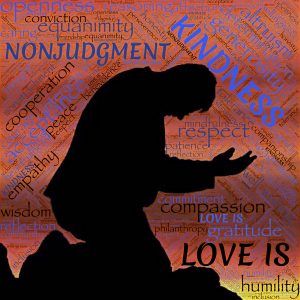
“The difference between a flower and a weed is a judgment.” I wish I could take the credit for those words but I can’t. The credits go to the late Wayne Dyer, an American author and motivational speaker. Then Ralph Waldo Emerson puts a further twist to it by expanding that a weed is a plant whose virtues have never  been discovered. There are so many people who have varying points of view and ways of seeing things; yet, some are not willing to have an open mind or even opening the lenses. As I get older, I have learned not to cast judgments because I don’t know the situations that people are in and I don’t even know how I would feel if I were in the same circumstances – as a result I don’t judge. Instead, I think or wonder what could cause the person to act or respond a particular manner. It is often easy to assume, or even do the stereotypical norm, rather than to ask people if they are okay or just simply to respond with a smile.
As we enter this New Year and decade, one of my mantra is that I should encourage others to not be judgmental. Also, where possible, perish the thought of having had similar experiences and therefore believe it is shameful to be emotional or wear emotions on the sleeves. Technically, I am a stranger who does not have a full grasp of the person’s issues nor I am capable of looking at it from their perspective. So often, we are quick to make judgments without knowing the person reasoning behind the actions. I recently saw a cartoon, which I considered funny. A man and woman are sitting at a table in a restaurant, dining, the woman had a huge plate of food in front of her and she said that it was the man who was supposed to pay because of the word, ‘MEN-U’. The man on the other hand, (who had only a glass with water), said it was both since the word said, ‘ME-N-U’, clearly this was a matter of whose perspective – the man’s or the woman’s!
 Then we can look at it from the classroom, one teacher might grade a paper based on his or her way of interpreting while another give another grade, who is to say that either teacher is wrong? I suppose that is why there is a rubric used to grade papers so that each person involved will know the established standards.
Then there is cultural perspective which, simply put, refers to the manner in which individuals are shaped based on their environment. Just thinking about “culture” and the way various people view things and situations can be interesting. A cultural perspective is also the point of view from which each individual person sees the same situation – when culture is mixed with point of view it or perspective it means that one person is seeing a situation based upon their beliefs, values, experiences that are commonly found in their own culture. I suppose that’s one of the reasons if people marry outside of their culture there can be chaos or misunderstanding. Even words can be misinterpreted in one culture versus another. I once experience this where my sister was braiding someone’s hair and based on the braiding process, she was hurting the person’s scalp. My sister’s word was “hush”, which meant that she was saying, “never mind, the braiding process will be over soon.” On the other hand, the young lady whose hair was being braided did not take kindly to that word. She thought that my sister was say that she should be quiet! I realized the misunderstanding and immediately had to explain the confusion. I suppose it would be remiss of me to talk about  perspective without giving a few more examples of how perspective affect family. One person might think that family is important and another think it is not. Yet whatever the person is doing does not adequately demonstrate the importance of family. One person might be saying it is important but does not want to spend time with the family during special ‘family’ holidays. Similarly, another might believe that bigger is always better or that entertainment is more important that the value placed on education. Are we able to separate our perceptions from our decision making? In all honesty, we sometimes allow our perception to get in the way of a new learning experience or simply getting to know someone. Are we willing to run that risk by simply casting judgments? This decade, we should seek to understand and be ready with a possible alternative suggestion rather than cast judgment. Who says that one person’s weed isn’t another’s flower? Similar to one person’s trash being another’s treasure!
Misunderstood
HOME

by Marcia Davis-Dawkins | Nov 26, 2019 | Education, Kids, Parents, Teachers
Love is Patient and Kind
By Dr. Marcia Davis-Dawkins
Many of us have heard the words from the Bible, “Love is patient and kind,” 1 Corinthians 13. I have often wondered if we understand what it really means to be “patient and kind” by showing and expressing love. What does it mean? It seems as if, in a world that is so filled with hate and despair, not to mention impatience, that it may be difficult to say that we truly know the meaning of love. It doesn’t seem as if we need to look too far to see all the hatred and disdain that so many people harbor. The cycle keeps going on and on. The news headlines  seem to be filled with lack of love. Where has love and patience gone? In the classrooms and schools in general, the students seem to be filled with sadness through bullying, teasing, and name calling among other unkindness. It sometimes seems unreal, and even frightening, to watch students start out playing and end up fighting and saying unkind words about each other simply because they are so impatient and mean. Where, oh where, did the love go?
On television, it seems as if the highlight is that teachers and students are fighting and the blatant disrespect is evident. Unkind words are exchanged in the heat of the moment and hurt people continue to hurt people. Everyone is quick to play the blame game instead of putting the shoe on his/her foot. Frustration gets in the way and the love is replaced with heated words and sadness that often lead to loss of lives and friendships. True love shows and tells us how to treat our fellow  classmates, co-workers, peers, spouses and human kind in general. In 2 Corinthians, it explains that true love is not angered easily, is quick to forgive and is always willing to celebrate life with friends, loved ones and just about everyone with whom we interact. Yes, this sounds easier said than done, however, it sets the standards by which we should live. I suppose most people might argue (with kind words) that since prayer and the Bible were taken out of the schools that love left as well. I dare say that 1 Corinthians 13 is the premise on which humankind and love were built. It sets the standards for how we should live by loving each other regardless of color of skin, class, economic status or educational accomplishments. It really makes me feel disheartened when I think of weddings, and then soon after divorces or Valentine’s Day when people simply use the word ” love” so loosely and then days after use the unkind words to tear down their partners. Oh, where is the love?
So, it seems as if the lack of love and unkindness are taking center stage these days. It’s almost as if those who show love or kindness are scoffed at, but I believe we cannot give up hope or throw up our arms in frustration; let the peace begin with us. Let kindness and love reign, even in the classroom. It doesn’t hurt to show love to every student with whom we come in contact. It might be the missing link in his or her life. Who knows? This love might be reciprocated and the classroom becomes a garden of love and kindness! It is true that kindness is one of the best ways to show love. Kindness and love can never be wasted; so don’t be stingy with them.
Love for Everyone

by Marcia Davis-Dawkins | Oct 21, 2019 | Education, Kids, Parents, Teachers, Teens
Life is Not About Getting What You Want!
By Dr. Marcia Davis-Dawkins
We often strive for the best and nothing is wrong with that. In fact, I say keep reaching for the stars, since only the best is good enough! However, there is always the “What Ifs?” What if the best I am reaching for is not enough? What if it’s not time yet? Time to get that big promotion, dream job, or even dream house? The question that always haunts us seems to be, “Should I give up trying or find new ways to make it work?” I have come to realize that I should not give up on whatever dreams I have, rather, I should keep striving. The consolation is that life is not about getting what we want immediately, but about working with what we have at the moment until things work out. Will things be ever perfect? Of course not! Perfection for my neighbor might be the ability to find the next meal, while perfection for another might be having a roof over their head and avoiding a life on the streets.
 Seeking perfection may even manifest in the classroom or in studies. One teacher might wish to have the perfect class in terms of behavior, while another teacher might see perfection as being able to communicate effectively with one student. This particular teacher is looking at winning one student at a time instead of the whole group at once. No matter what your goal may be, it is important to remember one solid philosophy that has always worked for me. The good Father won’t give us more than we can bear. He usually takes care of us and give us the “tools” to deal with whatever may come. He will give us strategies to deal with those seemingly unpleasant situations we face.
Life is about working with what we have at the moment. Then again, do we confuse my wants with my needs? There may be times when getting what we want is highly impossible because of our economical situation. I find that sometimes when I want to treat myself, I remind myself that I’ve worked hard for this and I deserve a gift from self. In the classroom, this kind of gift could come in the form of a simple break for students who have worked hard and have gone above and beyond to get work done correctly. The teacher might then give a well deserve and unexpected gift. This gift is seen as encouragement for the students to always work hard on a project/assignment. This might also challenge the student to work harder on another project so there could be more treats. Nothing is more rewarding to me than an educator that has seen a light switched on a student’s face when he or she has gotten a concept. I then know how well it’s worth my time and patience to reteach and retell. Brian Tracey reminded me in his quote, “I’ve found that luck is quite predictable. If you want more luck, take more chances. Be more active. Show up more often.” What say you, do you always get what you want or do you leave everything to luck? Don’t even try to answer immediately simply,
| “Become the impossible, do the unreal, be yourself
and be it all the way.”
– Hindi Krinsky |
Determination and Perseverance